Home Blog

Best hydrating conditioners for fine straight hair: Guide

0

What are the best hydrating conditioners for fine, straight hair?

The ideal hydrating conditioners for fine, straight hair are lightweight formulas that provide softness and easy detangling without weighing the hair down. Choose products labelled for fine hair, apply rinse-out conditioner mainly to the ends, and consider a light leave-in only when dryness, tangles or frizz need additional attention.

For a straightforward starting point, our overall editorial pick is OUAI Fine Hair Conditioner because its intended hair type directly matches this guide. Verb Ghost Conditioner is another relevant option for fine-to-medium strands, while Pureology Hydrate Sheer specifically targets fine, dry, colour-treated hair. These are suitability-based selections, not winners from a head-to-head performance test.

The goal is simple: comfortable ends, easier detangling and a finish you enjoy wearing. Dermatologists recommend choosing products made for your hair type and applying conditioner to the ends when hair is fine or straight. A richer formula is not automatically the most relevant starting point. The manufacturer details and AAD guidance supporting this comparison are linked below.

At a Glance: Which Conditioner Should You Choose?

All five products below are rinse-out conditioners. The category labels explain why each product belongs in this comparison; they do not imply independently proven superiority.

ConditionerSelection categoryManufacturer-stated suitability or purposeMain consideration
OUAI Fine Hair ConditionerOverall starting pointLightweight conditioning specifically for fine hairChoose the Fine formula rather than a different OUAI format
Verb Ghost ConditionerAlternative for easily weighed-down hairFine-to-medium hair; lightweight nourishment and detanglingLeave the product on for three to five minutes, then rinse thoroughly.
Pureology Hydrate Sheer ConditionerTargeted option for fine, dry, colour-treated hairLightweight, silicone-free conditioningCheck that the bottle says Hydrate Sheer, not simply Hydrate
Amika Mirrorball ConditionerShine-focused optionFine-to-medium hair seeking lightweight moisture and shineNumerical shine claims depend on the matching wash routine
K18 Damage Shield Protective ConditionerConditional protective-conditioning optionSoftening, detangling and conditioning protectionIt is separate from K18’s molecular repair mask

How These Conditioners Were Selected

This is a research-based buying guide, not a first-hand product test. Selection considers the manufacturer’s stated hair-type suitability, product format, intended purpose and application directions. General hair-care advice follows American Academy of Dermatology guidance.

OUAI, Verb, Pureology and Amika make explicit fine-hair or fine-to-medium-hair suitability statements. K18 appears as a conditional option because the brand describes lightweight conditioning and distinguishes protective conditioning from its separate repair-mask routine. No reviewer quotations, unverified discounts or personal testing experiences are used to establish these selections.

The American Academy of Dermatology’s guidance supports the application advice in this article; it does not endorse these brands or products. Numbering helps organise the shortlist rather than represent measured performance scores.

1. Overall Starting Point: OUAI Fine Hair Conditioner
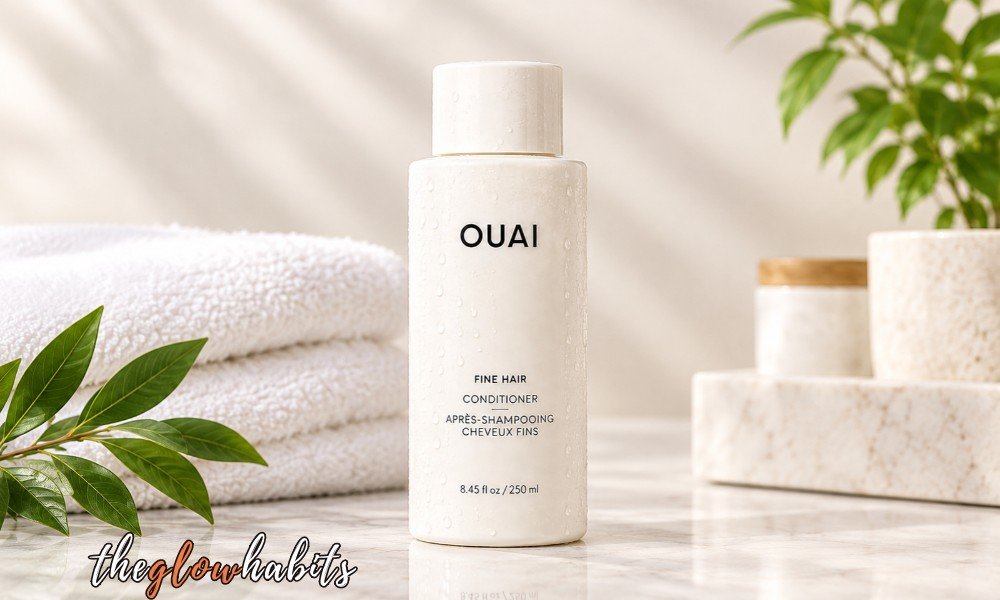
OUAI Fine Hair Conditioner earns the first position because it has a clear purpose: conditioning fine hair. The brand describes a lightweight formula intended to hydrate and leave hair soft and fuller-looking. Its direct fine-hair positioning is the reason for this selection, not evidence that it outperforms every alternative. See the OUAI Fine Hair Conditioner product details.

Choose this as your starting point if you prefer a traditional rinse-out conditioner specifically formulated for fine hair. That makes the recommendation easy to understand without relying on broad promises about repair, dramatic thickness or universal results.

Formula and Fragrance Details

OUAI highlights keratin, biotin and chia seed oil in this formula. The published ingredient list also includes glycerin, panthenol and fragrance. These are verified ingredient-list details, not evidence that the conditioner treats hair loss or produces a particular result for every reader.

The named fragrance is Mercer Street, with floral and citrus notes in the brand’s description. If scent influences your choice, use those details as a shopping check. Do not assume this conditioner smells like another OUAI product you already own.

How to Use It

OUAI recommends squeezing out excess water after shampooing, then applying a quarter-sized amount of conditioner with attention to the mid-lengths and ends before rinsing. For fine or straight hair, the American Academy of Dermatology’s general advice is to concentrate conditioner on the ends.

The product directions do not specify a timed waiting period. Follow your bottle rather than borrowing an application time from another conditioner.

What to Keep in Mind

Keep the product identity straight when shopping. OUAI Fine Hair Conditioner is not the brand’s Medium conditioner or Leave-In Conditioner. Your decision here concerns a rinse-out product specifically labelled for fine strands.

Compared with Verb, OUAI gives a starting amount rather than a three-to-five-minute application time. That is a practical routine difference, not a claim that either product conditions better.

2. Alternative for Easily Weighed-Down Hair: Verb Ghost Conditioner

Verb Ghost Conditioner is designed for fine-to-medium hair. The brand also specifically recommends it for gently detangling and nourishing hair that is easily weighed down. That makes it a relevant alternative when you want conditioning without moving straight to an intensive treatment. See the Verb Ghost Conditioner product details.

The useful question is whether its stated purpose fits your routine. Lightweight positioning supports its place in this shortlist, but it should not become a promise of zero residue or guaranteed root lift.

Formula and Fragrance Details

Verb highlights moringa oil, green tea extract and vegan proteins. Its full ingredient list includes hydrolyzed quinoa, soy and rice proteins, alongside fragrance. The brand’s product-page answers also identify the conditioner as silicone-free and suitable for colour-treated hair.

These details provide comparison points without predicting your exact finish. The presence of an oil does not turn this into a separate oil treatment, and a review describing a subtle scent does not make the formula fragrance-free.

How to Use It

Work the product through the mid-lengths and ends, leave it on for three to five minutes, then gently detangle and rinse thoroughly according to Verb’s instructions.

What to Keep in Mind

The application time is worth checking against your routine. A product can have the right hair-type positioning and still be inconvenient if you regularly rush through your shower. Use the published directions as part of the buying decision, not something to discover after opening the bottle.

Verb’s numerical frizz claim uses several products together. If you are only replacing your conditioner, do not treat that system result as proof of what this bottle alone will achieve.

3. Targeted Option for Fine, Dry, Colour-Treated Hair: Pureology Hydrate Sheer Conditioner
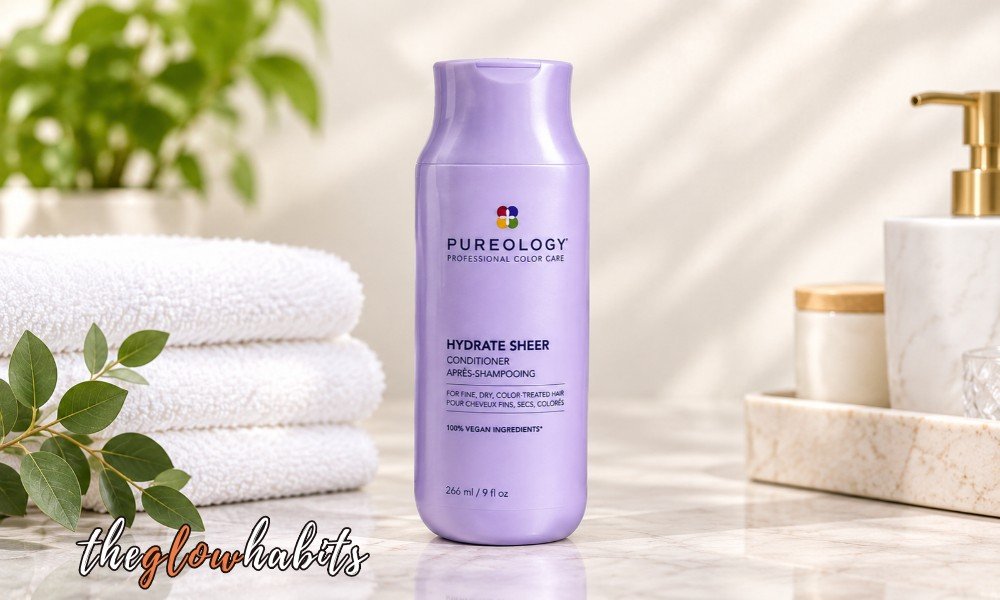
Pureology Hydrate Sheer is a specifically matched option in the Hydrate family for this article. Pureology describes it as a lightweight, silicone-free conditioner that softens and nourishes fine, dry, colour-treated hair. See the Hydrate Sheer Conditioner product details.

Why the Exact Product Name Matters

The original Hydrate and Hydrate Sheer are not identical recommendations. Pureology’s collection guide positions original Hydrate primarily for normal-to-thick hair and Sheer for fine hair needing lighter hydration. The Hydrate collection comparison explains that distinction.

The direct product page also uses broader hair-type categories when comparing conditioners. For this guide, Sheer remains the more explicit fine-hair match. That does not establish that original Hydrate is unsuitable for every fine-haired reader.

Formula and Fragrance Details

Hydrate Sheer’s published ingredient list includes glycerin, soybean oil, hydrolyzed wheat-derived ingredients, fragrance, mint oil and menthol. The product page describes rose, moss and mint fragrance notes.

Those details are useful if you already know which scents you prefer. Keep product-specific information separate from general collection descriptions; a range can contain several formulas and fragrance descriptions.

How to Choose and Use the Right Bottle

Look for the full name, Hydrate Sheer Conditioner, and follow the directions on the product you purchase. Do not rely on a retailer heading that shortens both formulas to “Hydrate.”

The retrieved product page did not provide a clear application time. This guide therefore does not invent one or reuse original Hydrate instructions. Your selected bottle is the appropriate source for that detail.

What to Keep in Mind

Silicone-free is a verified formula characteristic, not a comparative result from this guide. Choose Hydrate Sheer because its stated suitability fits your needs. For fine, dry, colour-treated hair, that targeted positioning is the strongest reason to put it on your shortlist.

4. Shine-Focused Option: Amika Mirrorball High Shine + Protect Antioxidant Conditioner
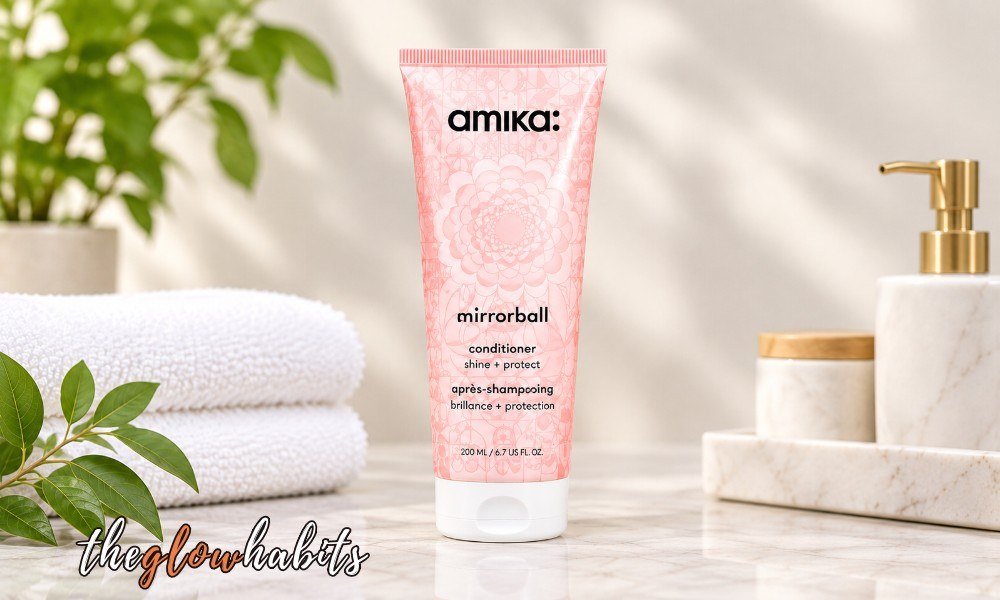
Amika positions Mirrorball for fine-to-medium hair combating dullness. Its stated purpose makes it relevant when shine and lightweight moisture are priorities, rather than dryness alone. See the Amika Mirrorball Conditioner product details.

Formula and Fragrance Details

The ingredient list includes dimethicone, silicone quaternium-8, glycerin and fragrance. Amika also highlights botanical ingredients including grape leaf, raspberry, magnolia and sea buckthorn.

These ingredients distinguish the formula from silicone-free options in the shortlist. Their presence alone does not establish how heavy the finished product will feel on your hair. Use the intended hair type and your own experience as separate comparison points.

How to Use It

Amika recommends squeezing out excess water, applying the conditioner from the mid-lengths to the ends, leaving it on for two to three minutes and rinsing thoroughly.

This is a shorter stated waiting period than Verb’s three-to-five-minute direction. That difference may matter to your routine, but it is not a measure of comparative conditioning performance.

What to Keep in Mind

Amika publishes a 45% shine-improvement claim, with its main qualification specifying use with Mirrorball shampoo. A repeated claim block on the page uses different pairing wording. This guide therefore treats the figure conservatively as a manufacturer-reported routine claim, not a verified conditioner-only result.

Choose it for its stated fine-to-medium-hair suitability and shine focus, not because a percentage guarantees the finish you will see. A shinier appearance is not evidence here of permanent structural repair.

5. Conditional Option for Protective Conditioning: K18 Damage Shield Protective Conditioner

K18 Damage Shield Protective Conditioner is designed to soften, detangle and help protect hair from daily damage. The brand describes lightweight conditioning without film-forming silicones or waxes. See the K18 Damage Shield Conditioner product details.

It belongs here as a conditional choice for readers who want protective conditioning alongside softness—not as the default answer for every case of dry ends. Unlike the first four selections, its product description is not primarily a fine-hair-specific recommendation.

Formula and Fragrance Details

The listed ingredients include K18’s signature peptide, ceramide NP, sweet almond oil, jojoba oil, and fragrance. The brand presents the formula as concentrated and recommends starting with less than a traditional conditioner.

That instruction is more useful than assuming a generous application is necessary. Begin with the manufacturer’s small-dose approach and assess the finish before increasing the amount next time.

How to Use It

K18 recommends applying a small amount from the mid-lengths to the ends, building only as needed, then rinsing thoroughly. Its conditioner directions do not specify a timed waiting period.

What to Keep in Mind

Damage Shield Conditioner and K18’s Leave-In Molecular Repair Hair Mask are separate products with different instructions. K18’s own product guidance distinguishes conditioning protection from molecular repair treatment. If you already use the mask, follow its specific sequencing guidance rather than treating the two products as interchangeable.

K18 also states that this conditioner has no SPF. Its hair-protection positioning should not be mistaken for sunscreen protection for your scalp.

How to Select the Best Hydrating Conditioner for Fine, Straight Hair

Start With the Hair Type on the Label

“Hydrating” describes a desired benefit, but it does not tell you whether a product is designed for fine strands. The American Academy of Dermatology recommends choosing products labelled for your hair type. That is a useful first filter before fragrance, packaging or a long list of featured ingredients. See the AAD healthy-hair guidance.

Within this shortlist, OUAI explicitly targets fine hair; Verb and Amika target fine-to-medium hair; Pureology Sheer specifically targets fine, dry, colour-treated hair. K18 is the conditional protective-conditioning comparison. Those distinctions are supported by the product sources above.

Match the Product Format to the Job

A rinse-out conditioner belongs in the washing stage. A leave-in remains on the hair and provides an additional conditioning step when needed. Dermatologists explain that these formats have different chemistry; a rinse-out conditioner should not be repurposed as a leave-in. See the AAD leave-in conditioner guidance.

If your current rinse-out routine keeps your hair soft and manageable, there’s no need to add another step just because it works for someone else. If tangles, dryness or frizz remain troublesome, a lightweight leave-in may be useful. Fine, straight hair needs a lighter leave-in to avoid a limp, greasy finish.

For that separate step, explore our guide to leave-in conditioners for fine, straight hair.

Compare Exact Products, Not Just Brand Names

A familiar brand can offer formulas for very different needs. Pureology’s original Hydrate and Hydrate Sheer are a clear example. Likewise, a rinse-out conditioner and a leave-in from the same brand should not be treated as identical purchases.

Before buying, record:

  • The full product name.
  • Whether it rinses out or stays in.
  • The intended hair type.
  • The application instructions.
  • The bottle size and final checkout price.

This checklist helps you compare like with like. A lower headline price is not enough to identify the better purchase if the bottle sizes differ.

Check Fragrance and Formula Preferences

All five published ingredient lists include fragrance. Pureology specifically describes Hydrate Sheer as silicone-free, and Verb identifies Ghost as silicone-free in its product-page answers. Amika lists dimethicone; OUAI lists a dimethicone-derived ingredient. K18 uses the narrower description “without film-forming silicones or waxes.”

Do not collapse those different statements into a blanket ranking. If a particular ingredient matters to you, check the exact current bottle. Verb and Amika also advise checking packaging because ingredient lists may change.

Compare Value Without Inventing a Budget Winner

Decide your budget before choosing a larger or more expensive bottle. Compare the same measurement unit and include delivery charges. Do not compare a travel bottle’s price with a full-size bottle as though the quantities match.

This guide does not name a budget winner from unverified retailer offers. A practical approach is to compare your actual shortlisted checkout options. Choose the size you are comfortable buying rather than assuming a larger bottle is automatically the right first purchase.

How to Condition Fine, Straight Hair with a Simple, Effective Routine

1. Shampoo According to Your Scalp’s Needs

Wash your hair as often as needed, depending on how quickly it becomes oily or dirty. The AAD notes that people with straight hair and an oily scalp may need daily shampooing; there is no requirement to copy another person’s wash schedule. Concentrate shampoo on the scalp instead of working it aggressively through the full length of your hair.

2. Apply Conditioner Where It Is Needed

For fine, straight hair, apply conditioner mainly to the ends to add moisture without weighing down the roots. Follow the selected product’s directions for the amount and any additional placement guidance. This keeps the routine focused on conditioning the lengths rather than automatically coating the scalp.

3. Follow the Correct Application Time

Use the timing for the actual product. The manufacturer sources in the profiles above support this reference table.

ConditionerApplication guidance
OUAI Fine Hair ConditionerSqueeze out excess water; apply a quarter-sized amount to midshaft and ends; rinse
Verb Ghost ConditionerLeave on for three to five minutes, then detangle and rinse thoroughly
Pureology Hydrate Sheer ConditionerFollow the selected bottle; a clear application time was not provided on the retrieved page
Amika Mirrorball ConditionerLeave on for two to three minutes, then rinse thoroughly
K18 Damage Shield ConditionerStart with a small amount, build as needed, and rinse thoroughly

The table is a wash-day reference, not a reason to extend treatment time. Do not assume that instructions for one formula apply to another.

4. Handle Wet Hair Gently

Avoid pulling through tangles. The AAD recommends a wide-tooth comb and advises letting straight hair dry a little before combing, starting at the ends and working upward. Gently absorb water with a towel or T-shirt rather than rubbing aggressively.

5. Add Leave-In Only When It Solves a Remaining Problem

Apply a small amount of lightweight leave-in to damp lengths where needed. Keep it off the scalp and use the smallest amount that works; fine hair needs less than thick hair. The AAD leave-in resource above supports this approach.

6. Treat Heat Protection as a Separate Check

Not every conditioner provides heat protection. Look for that claim on the packaging of the product you use before styling. Dermatologists also recommend limiting excessive heat and using low or medium settings. Conditioning and heat protection should be checked as separate needs.

What to Do When the Result Still Feels Wrong

Your Roots Look Flat, but the Ends Feel Comfortable

Check placement before abandoning the conditioner. The AAD’s general guidance recommends applying conditioner to the ends of fine or straight hair.

As a practical comparison, keep the rest of your routine unchanged on the next wash and concentrate the conditioner on the ends. Note whether you prefer the finish. This is a personal observation method, not a guarantee that placement is the only cause.

Your Ends Still Tangle After Washing

If a rinse-out conditioner doesn’t provide enough moisture, a lightweight leave-in treatment may offer extra hydration without weighing down your hair. Apply it to damp hair, focus on the troublesome lengths and avoid adding a generous layer everywhere. Dermatologists recommend using the smallest amount that achieves the intended result.

You Need to Wash Your Hair More Frequently

Let scalp cleanliness guide the decision. Straight hair with an oily scalp may need frequent washing, including daily shampooing for some people. A conditioner should not be judged by whether it lets you match someone else’s three-day wash schedule.

You Are Worried About Thinning or Persistent Breakage

Keep this concern separate from choosing a conditioner. A cosmetic buying guide cannot identify the cause or replace appropriate care. The AAD’s leave-in guidance recommends dermatological help when breakage or manageability problems persist despite rinse-out and leave-in care.

A Practical Way to Compare Conditioners Without Buying a Shelf Full

Start by identifying the exact problem: uncomfortable ends, difficult detangling, a heavy finish or dull-looking lengths. Use that description to choose one relevant formula from the shortlist. The AAD’s advice to select products for your hair type provides the starting point; the shortlist then separates general fine-hair conditioning, colour-treated hair and shine-focused care.

Consider an illustrative example: your scalp needs frequent washing, but your ends feel dry. Those needs do not have to compete. Dermatologists recommend washing according to oiliness and applying conditioner to the ends when hair is fine or straight. You can address scalp cleanliness and end conditioning in the same routine without treating the entire head identically.

Keep a brief wash-day note with four details: the product used, where you applied it, whether you added a leave-in and how the hair felt after drying. Judge the result against your original concern rather than expecting every product to improve softness, shine, volume and detangling equally. This note is a practical observation tool, not a controlled test.

For example, if the ends feel comfortable but tangles remain, assess whether a small amount of lightweight leave-in helps before replacing the rinse-out conditioner. If you change both products together, your own notes will be less useful for identifying which change you preferred. The AAD recommends using a leave-in conditioner when a rinse-out conditioner alone doesn’t provide enough manageability.

How to Read Conditioner Claims Before Buying

A numerical claim deserves a look at the small print. Verb’s published 79% frizz-reduction claim uses Ghost shampoo, conditioner, mask and primer together. Amika’s main 45% shine claim specifies use with Mirrorball shampoo. These are manufacturer-reported routine results, not conditioner-only outcomes established by this guide.

Protection wording also needs a clear boundary. K18 explicitly says Damage Shield Conditioner has no SPF. Its hair-conditioning protection positioning should not be mistaken for sunscreen protection for the scalp. A familiar word such as “protect” does not make every protective product interchangeable.

For a practical shopping comparison, write down the exact product and routine behind the claim. Then compare it with the purchase you intend to make. If you are replacing only your conditioner, do not use a multi-product percentage as your personal expected result.

Frequently Asked Questions

Should I Put Conditioner on the Roots of Fine, Straight Hair?

Generally, focus rinse-out conditioner on the ends. The American Academy of Dermatology recommends this placement for fine or straight hair. Check the specific product’s directions as well.

Should You Condition Your Hair Every Time You Shampoo?

Yes. The AAD recommends conditioner after washing your hair to moisturise, detangle and improve manageability.For fine, straight hair, focus conditioner on the ends instead of routinely applying it to the scalp.

Do You Need Both Rinse-Out and Leave-In Conditioner?

Not necessarily. A leave-in conditioner may be useful if your regular conditioner doesn’t adequately address dryness, tangling, or frizz. If you have fine, straight hair, opt for a lightweight formula and apply a small amount to damp mid-lengths and ends, avoiding the scalp.

Is Pureology Hydrate or Hydrate Sheer the Better Match for Fine Hair?

Hydrate Sheer is the more specifically targeted formula. Pureology’s collection guide positions it for fine hair needing lighter hydration, while original Hydrate is primarily presented for normal-to-thick hair. This is intended suitability, not a guarantee that every reader will prefer Sheer.

Can You Use Rinse-Out Conditioner as a Leave-In Treatment?

No. Dermatologists advise against using rinse-out conditioner as a leave-in, including diluting it with water in a spray bottle. The formats have different chemistry and intended uses. If you need an extra conditioning step, opt for a product specifically formulated and labelled as a leave-in conditioner.

Conclusion

Finding the right conditioner starts with your main concern dry ends, tangles or a heavy finish. Choose one option from this shortlist, follow its directions and judge the result after drying. Keep your hair care routine simple, introducing additional products only when your hair needs them.


Rhode Glazing Milk vs Peptide Glazing Fluid: My Honest Pick

0

Glazing Milk vs. Peptide Glazing Fluid

Peptide Glazing Fluid and Glazing Milk sound extremely similar, but these two glaze products have different roles. Rhode describes the fluid as a dewy gel serum and the milk as a milky essence that helps calm skin. www.rhodeskin.com

The clear differentiation is in the order: I would use milk first for a deeply hydrated, glowy base, then fluid for the glazed finish, as Rhode recommends. www.rhodeskin.com That distinction is lacking in the names. If you are wondering which is better, I would buy both only if I wanted a prep step and a separate serum.

Rhode and Celebrity Skincare

Rhode entered a market crowded with the newest celebrity-backed skincare brands. It was founded by Hailey Bieber. investor.elfbeauty.com To me, the genius of its marketing was advertising her glazed donut skin while introducing the brand to the world; Vogue reports that Bieber had popularized the look. www.vogue.com

Fenty and Rare have upped the stakes for celebrity brands in my eyes, so I hesitate to dismiss a launch as a cash-grab. These formulas seem legitimately worth trying when their different purposes fit the routine you want.

Glazing Milk vs. Peptide Glazing Fluid

In a Rhode skincare product comparison, I ask what the difference between glazing milk and peptide glazing fluid is. Both products look extremely similar, but the milk has a toner-like, creamy, milky texture and is the essential prep step that goes on first.

Rhode lists calming and soothing skin, reducing the appearance of redness, and supporting barrier repair among its benefits. www.rhodeskin.com The Fluid is a gel-serum hydration layer that goes on next to visibly plump, hydrated and brightened, leaving a dewy glaze and the brand’s signature glazed finish. www.rhodeskin.com That is how they are different: the Milk makes skin feel cushiony-soft and supple, while the Fluid follows in the layering order. www.rhodeskin.com

Skin Needs and First Impressions

With dry, sensitive skin, I care about product absorption and barrier comfort; repairing that barrier matters more to me than a flashy finish. Purchasing both seemed excessive, but I was eager to try them.

My first impressions centered on texture and application: the Fluid’s pump dispenser versus pouring the Milk from its bottle. www.rhodeskin.com I pour the Milk into my hands before applying it to my face, neck, and chest; both products appeared white, then turned clear as I worked them into the skin. When I think about a repeat purchase, which is better for me depends on whether I want a soft prep layer or a brighter finish.

Rhode Glazing Milk Review

Makeup Wear and Skin Results

Rhode Glazing Milk worked best for me as a pre-makeup skincare step and a primer, not a deep treatment. www.rhodeskin.com My first impression was the immediate glow: a dewy, glazed donut, a no-makeup look with the ultra-hydrated appearance. I associate with Hailey Bieber. www.vogue.com

On my face, the product created a beautifully hydrated, smooth surface, minimizing dry patches and providing an ideal base for makeup, especially liquid and gel formulas. Can you apply powder directly after it? Powder products appeared cakey on my skin, making the product less suitable for use under a powder finish. Those thoughtful ingredients matter, but this beauty review is about what I could see and feel.

Skin Feel Over Time

So how does it work for dry, sensitive skin over time? Rhode says the fragrance-free Milk can calm and soothe, improve hydration, reduce the appearance of redness, and boost or repair the skin barrier. www.rhodeskin.com

The finish felt calming and soothing, but my redness did not improve; the claim about reducing it did not match my experience. My hydrating vitamin C oil had trouble absorbing after I tried layering it over the milk; it made me question its promise to prep the skin for better product absorption. www.vogue.com Even after working with the product, I could not judge its penetration or tell whether it was penetrating deeply; I saw no deep change or long-term changes to my barrier.

Scent and Irritation

It did not cause irritation or breakouts, and it did not break me out. I noticed a chemical scent, a chemical-like odor close to Elmer’s glue, despite the omitted fragrance. You can smell it without added perfume; fragrance seems unnecessary to me and is typically irritating for my sensitive skin. The American Academy of Dermatology notes that added scents can irritate sensitive skin.

rhode glazing milk dupes

So what are the Rhode Glazing Milk dupes? For milky toner alternatives, BYOMA Hydrating Milky Toner, which costs $14.99, and The Ordinary Saccharomyces Ferment 30% Milky Toner, with a $14.00 regular price, are two options to compare. byoma.com

My old dupe prices also list Rephr balancing essence 1.0 at $30.00; I cannot verify it as a current offer on the brand’s site.

How to apply Rhode glazing milk

If you wonder how often you should use Rhode Glazing Milk, the brand website offers simple guidance: apply it to your face morning and night, after cleansing and before the rest of your skincare routine steps. The brand says it is safe before serums such as Vitamin C serum or retinol. www.rhodeskin.com

Body Application and Cost

Can you use it for body application? Rhode has shown an all-over glistening hydration effect, but I would avoid full-body use. www.rhodeskin.com

At the $30 per bottle figure in my older notes, the cost effectiveness was not convincing; the current large bottle costs $32. www.rhodeskin.com It is not an effective way to replace a moisturizer for deep skin hydration. For more moisturizing alternatives, a hydrating oil or coconut oil melt makes sense to me.

On special occasions, the whole-body glow may be worth it, though potential clothing transfer is my concern: will it leave marks on your clothes?

Rhode Peptide Glazing Fluid Review

Texture, Skin Feel, and Pump

In this review, I start with the comparison that mattered to me: how does Rhode Peptide Glazing Fluid compare with Glazing Milk? Rhode describes it as a gel serum meant to plump and hydrate skin for a dewy, glazed finish; to my fingers, its texture feels gel-like. www.rhodeskin.com Versus Milk, it gave me a subtle glaze and less of a super glowy look. I noticed surface hydration and a hydrating, moisturizer-like feel; my skin looked hydrated, but nothing special.

Still, the gel had a soothing, almost cooling sensation, and it made a good makeup base under foundation when I had dry patches. The sticky feel was harder to ignore: persistent stickiness fades over time but does not fully fade, and I noticed fading without the tackiness disappearing. Its chemical scent was less noticeable than Milk’s, so scent-sensitive readers may prefer it.

Niacinamide and Sensitive Skin

Do you have sensitive skin, and is niacinamide suitable for you? Does the product contain niacinamide? Yes. Rhode lists that ingredient and notes it can be sensitizing to some; if niacinamide tends to irritate your skin, it can cause a reaction, so the sensitivity risk is worth considering. www.rhodeskin.com I experienced no irritation, purging, or breakouts; it did not break me out.

Pump and Customer Service

My preference is a sanitary pump, but the packaging I received had a faulty pump. I asked customer service for a replacement or troubleshooting advice; their answer for application was to apply the serum directly to your hands, which felt unsatisfying. What if it fails again—will customer service replace it? I had considered repurchasing, but that experience settled my purchase decision: I would not repurchase.

Rhode Peptide Glazing Fluid

Rhode peptide glazing fluid dupes

What are Rhode Peptide Glazing Fluid dupes? These alternative serums and moisturizers serve different parts of a dewy skincare routine.

The supplied dupe prices list Glow Recipe Watermelon Glow Niacinamide Dew Drops Serum at $49.00, though Glow Recipe currently shows $36.

Summer Fridays Cloud Dew Gel Cream Moisturizer is the option which costs $38.00.

The supplied list prices Tata Harper Water-Lock Refillable Moisturizer with Skin-Smoothing Peptides and Hyaluronic Acid at $72.00; its current product page shows $74.

How to apply Rhode peptide glazing fluid

How many pumps of Rhode Peptide Glazing Fluid should you apply? The 1-2 pumps in the earlier notes differ from the Rhode website’s current guidance: Use 2–3 pumps on your face after morning or evening cleansing, then follow up with moisturizer. If toning is part of your AM or PM skincare routine, do it before the Fluid.

For makeup, I like to mix it with foundation for a dewy look and a nice finish. But powder application was less forgiving: setting my T-zone gave it a cakey appearance. Does powder work over it? In my experience, it had a poor response there, so I would use a light hand when setting your foundation.

Rhode Glazing Milk vs Peptide Glazing Fluid

Rhode glazing milk vs peptide glazing fluid comparison

The Peptide Glazing Fluid gave my skin a subtle, non-glittery glow and made a great base underneath makeup, especially under liquid products, although it is not designed as a makeup base. It felt more calming than Glazing Milk, but neither product soothed redness. I cannot claim either formula will soothe everyone’s skin; I can only say the fluid calms mine.

Rhode describes the fluid as a hydrating serum, yet milk felt more hydrating to me. That claim did not match my experience.

Which product is better? My glazing milk recommendation is for the fuller glazed donut look; you do not need both extremely similar products in your skincare routine. Both gave me glow without glitter, and their published ingredient lists do not appear to contain silicones.

packaging

The sleek packaging looks good on display on a counter, but the Fluid’s faulty pump was not working and would not work for me. Milk’s twist-top lid lets me apply it directly to my hands. I did no leak test when traveling with it; I stored it laying down in a bathroom drawer, with no problems in storage.

price and availability

For value for money, compare the same $32 retail price: how much does each product get you? The earlier 4.7oz figure for Glazing Milk in my notes does not match its current 4.2 oz size; Peptide Glazing Fluid is 1.7oz.

Milk has a runnier consistency, so I would not call either one the cheaper or more cost effective option. Is it worth buying both? $32 seems fairly priced for skincare, but the order hassle was real: my purchase directly from the Rhode website took a week and a half for delivery.

How long does an order take now, and how much must you spend to get free shipping? Rhode’s threshold is $45 for most U.S. addresses.

Where can you buy these products? The old statement that you must buy directly from Rhode, with no discounts or loyalty points on offer, is outdated. Sephora now sells both alongside comparable products at various price points and offers members faster standard shipping and loyalty benefits.

What Works for Dry Skin in Winter?

How does glazing fluid compare to glazing milk for horribly dry skin? Rhode describes the milk as a ceramide essence for hydration and the fluid as a gel serum that adds a glazed look. Its suggested order is milk, then fluid, then moisturizer. Rhode’s product guide www.rhodeskin.com

If you guys like the milk for everyday use, that is the useful comparison: the fluid adds a more visible glow to the routine you already have.

If that glow doesn’t last as long during the winter months, I would pay attention to how your skin feels later in the day as well as how it looks at first. Does the fluid versus milk make a difference to the finish, or is extra hydration what you need?

For daily use on very dry skin, the American Academy of Dermatology recommends a cream or ointment. That is the moisturizing step to consider when judging lasting power.

Which product is worth buying?

If I am on a budget, what are the budget-friendly alternatives? The dupes are worth trying if you want a similar look for less.

Do either of these Rhode products give noticeable results? Neither product gave me out-of-this-world results, and my skin did not particularly benefit. Will I miss them if I stop using them? When I removed the products from my skincare routine, I did not; their absence showed how limited the benefits were.

Which Rhode product should I buy if I choose only one? Glazing Milk is the clear winner for me, and I recommend trying it.

Where can you shop? Sephora has it; buying at Sephora may be the better choice if you value VIB points and perks, free shipping for members, and its return policies.

Does the store offer better customer service? In my experience, yes. You can also buy directly from the Rhode website, depending on availability.

Glazing Milk vs Peptide Glazing Fluid FAQs

What’s the difference between them?

Milk is a milky essence used first, after cleansing. Fluid is a gel serum used next for a glazed finish. I found Milk more hydrating, even though Rhode markets Fluid as the hydrating step.

Do you need both?

Not really. They’re similar enough that I’d pick just one. If I had to choose, it’s Glazing Milk.

Do they reduce redness or repair the barrier?

Rhode claims both, but I didn’t see it. My redness didn’t improve with either product.

Does either cause irritation?

No breakouts or irritation for me with either. Milk had a faint chemical scent despite being fragrance-free.

How do they wear under makeup?

Both work fine under liquid or gel products, but neither holds up well under powder — my T-zone looked cakey.

Which is better for dry, sensitive skin?

Milk. It felt more hydrating and cushiony. Fluid had a tackiness that faded but never fully went away.

Are they worth $32 each?

Not convincingly, in my experience. Neither gave dramatic results, and I didn’t miss them when I stopped using them.

Are there good dupes?

Yes—BYOMA or The Ordinary for Milk, and Glow Recipe, Summer Fridays, or Tata Harper for Fluid. Check current prices before buying.

Rhode’s site or Sephora?

Sephora, for faster shipping and loyalty perks. My direct Rhode order took a week and a half.

Final Verdict

I don’t think you need both. Glazing Milk is my pick—more hydrating, easier to apply, and a fuller glazed look. Peptide Glazing Fluid felt subtler and stayed slightly tacky, and my bottle arrived with a faulty pump; customer service didn’t really fix it. Neither delivered on redness or barrier claims for me, and I didn’t miss either after stopping. If you want to try the look for less, the dupes are a solid starting point.

Since this verdict differs from your other two reviews (which were more positive on both products), I’d still suggest reconciling that before publishing all three, or adding a line noting results vary by routine and skin type.

Rhode Glazing Milk Review: Honest Results After Months

0

Is Rhode Glazing Milk worth it? Yes, if you want a light, dewy prep layer under makeup, skip it if you need a moisturiser replacement or dislike a briefly tacky finish.

The promise of glazed skin is easy to sell in a photograph. The harder question is whether the bottle earns a place beside products you already use. I kept coming back to Rhode Glazing Milk for the quiet things: my dry patches looked less obvious, foundation sat more comfortably, and my face had a soft sheen without feeling coated. The catch was a short, tacky phase after application. If your routine is already doing all of that, this may be a lovely extra rather than a necessity.

My notes in the supplied draft describe combination skin, dryness around the nose and chin, twice-daily use for a few weeks, and continued use over months. They are personal observations, not a controlled trial. Here is what I would want to know before spending money on it.

At a glanceMy take
What it isA fragrance-free, milky ceramide facial essence used after cleansing.
Best reason to buyA comfortable hydration layer and dewy makeup prep.
Main drawbackA little tackiness at first; it adds a step and does not replace a rich moisturizer for dry skin.
Best fitSomeone who likes a lightweight glow and can use another moisturizer if needed.
US price checked September 2026$32 for 4.2 oz; $20 for the 1.7 oz mini on Rhode’s product page. Prices may change.

What is Rhode Glazing Milk?

Rhode calls Glazing Milk a ceramide facial essence. It goes on after cleansing and before serums or moisturiser. Picture the comfort of a milky lotion in a more fluid layer: its job is to leave skin feeling hydrated and looking softly dewy, not to act as a cleanser, sunscreen, or treatment for a skin condition.

The ingredient list has a sensible moisture story. Ceramides NP, AP, and EOP are barrier lipids; glycerine and several forms of sodium hyaluronate help attract water; and beta-glucan is also in the formula. Rhode highlights a mineral complex and vitamin E. The product is listed as fragrance-free. Those details explain why the formula is aimed at hydration and barrier support, but an ingredient list alone cannot predict whether it will suit your skin. Rhode’s full ingredients and directions are the best reference if you avoid a specific ingredient.

Rhode also says it can reduce the appearance of redness over time. That is a cosmetic claim, not a promise to treat persistent redness. I noticed calmer-looking cheeks in my own routine, but I cannot isolate the milk from everything else I used.

Texture, glow, and the small catch

The first press feels more substantial than a watery toner. It spreads quickly and leaves a fresh sheen rather than the thick slip of a cream. I liked the way it took the papery look out of the skin around my nose and chin. That is the kind of difference I notice in ordinary daylight, when there is nowhere for a highlighter to hide.

It is briefly tacky on me. Give it a moment before the next layer and the finish settles. I would not call it weightless or completely non-sticky just to make the review sound cleaner. On days when my skin already feels balanced, I sometimes want one fewer step; on dry mornings, that extra cushion feels worthwhile.

After a few weeks, the draft notes describe fewer visible dry patches and cheeks that looked less red. I can report those changes as my experience, but I would not attribute improved serum absorption, long-term oil control, or better tolerance of tretinoin to this essence without a more careful comparison. The instant glow is easier to judge than a long-term barrier claim.

Does Rhode Glazing Milk work under makeup?

This is where I understand the appeal. Applying a thin layer before moisturiser and SPF helped my foundation glide on more smoothly without clinging to dry patches. I did not notice obvious slipping or pilling in the routine described in my notes. Your sunscreen, foundation, amount of product, and weather can change that result.

Rhode suggests mixing it with foundation for a dewy finish. I’d test it as a separate step in your skincare routine first to see how it works on its own. If you mix it with a complexion product later, make a small amount on the back of your hand and check the wear before relying on it for a long day. Keep sunscreen as its own properly applied step.

How to Use It and Add It to Your Routine

Shake the bottle. After cleansing, press the milk onto your face and neck; Rhode also suggests the décolleté. Follow with your serum if you use one, then moisturiser and morning SPF. Rhode’s own suggested pairing is glazing milk before peptide glazing fluid, then barrier restore cream or barrier butter. You can use the milk in the morning or evening.

Glazing Milk vs. Peptide Glazing Fluid: Milk is the milky essence and first post-cleanse prep step. Fluid is a gel serum layered afterwards for more visible dewiness. Both products can work well together, but you don’t need to buy both to see whether one benefits your routine.

If your skin is sensitive, add new products to your routine one at a time. The American Academy of Dermatology’s guide to testing skincare products explains how to check a product before using it on your entire face. Fragrance-free does not mean irritation is impossible.

Who Should Try It and Who Can Skip It?

I would point someone toward Glazing Milk if they want a light hydration layer, dislike the feel of a heavy cream beneath makeup, or enjoy a soft glow on makeup-free days. It may be especially satisfying when dehydration makes foundation catch around the nose or chin. Rhode says it is suitable for all skin types, but suitability on a label cannot replace your own tolerance test.

I would pause if your skin is very dry and you expect this alone to seal in moisture. A moisturiser still matters in my routine. Oily or congestion-prone readers may prefer to start with a small amount and decide whether another layer is useful. If it stings, increases congestion, or leaves a finish you dislike, the glow is not a reason to keep using it.

Price and value: is the bottle worth $32?

At the US prices checked in September 2026, the 4.2 oz bottle is $32 and the 1.7 oz mini is $20. The mini costs more per ounce, but its lower upfront price makes sense if you want to test the texture and finish first. Sephora also lists the product; compare the current checkout price and availability where you live.

My answer to “worth it” is conditional. If it makes your existing moisturiser and makeup routine feel better, $32 can be reasonable for an essence you reach for often. If your current serum already leaves you comfortable and dewy, buying another bottle for the same job is hard to justify. I would not use a competitor’s stale price or a bottle-size rumour to make this look like a better deal.

Final verdict

I began to be sceptical of the celebrity skincare glow. The part that won me over was less dramatic: on dry mornings, Glazing Milk made my face feel comfortable and gave makeup a smoother-looking start. It is a pleasure to use, with a fleeting, tacky stage and a real limit on how much moisture it can provide alone. I would buy it again for that light, dewy prep; I would keep my moisturiser.

An original way to decide whether a milky essence earns its step

The question I would ask is not “Does it make me glow in a mirror?” Almost anything freshly applied can do that. Ask whether the skin around your nose and chin still looks comfortable at lunch, once the initial sheen has faded. That is where a prep layer can prove its value in an ordinary day and where a pretty first impression may fall apart.

If you already own a hydrating serum, try a simple three-morning comparison before buying a second full-size bottle: keep your cleanser, moisturiser, SPF, and foundation the same; use the milk on one morning and skip it on another; repeat the more convincing routine on day three. Note the feel after ten minutes and the look of dry patches or makeup at midday in the same light. This is a practical shopping check, not a clinical test, but it answers your question more honestly than a universal “must-have”.

The mini also changes the value calculation. At the current US list prices, the full bottle is about $7.62 per ounce ($32 ÷ 4.2), while the mini is about $11.76 per ounce ($20 ÷ 1.7). The large bottle offers more volume for the money; the small one buys you a cheaper experiment. Choose based on uncertainty, not simply on which price tag looks lower.

Rhode Glazing Milk FAQs

Can Rhode Glazing Milk replace moisturiser?

On my combination skin, it sometimes feels like enough on lighter days, but I wouldn’t rely on it to replace my regular moisturiser. Dry skin generally needs a separate moisturiser, and this essence is meant to be a prep layer.

How do you use Rhode Glazing Milk?

Shake it, press it onto skin after cleansing, then apply any serums, moisturizer, and morning SPF. Rhode places peptide glazing fluid after the milk.

Does the Rhode Glazing Milk pill work under makeup?

I didn’t experience any pillering with the routine in my notes, but results can vary depending on your sunscreen and foundation. Let each layer absorb before applying the next, and test the products you use together.

Is Rhode Glazing Milk good for oily or acne-prone skin?

Its light texture may appeal to oily skin, but acne-prone skin can react differently to any new product. Start with a small amount, introduce it alone, and stop if it irritates or congests your skin.

What is the difference between glazing milk and peptide glazing fluid?

Glazing Milk is a milky essence used just after cleansing for hydrated prep. Peptide Glazing Fluid is a gel serum used after the milk for an extra dewy finish.

Does Rhode Glazing Milk reduce redness?

Rhode says it can reduce the appearance of redness over time. My cheeks looked calmer after a few weeks, but that personal observation does not show that the milk treats the cause of redness.

Do I need glazing milk if I already use a hydrating serum?

Maybe not. If your serum already gives you comfortable skin and makeup that sits well, compare both routines before adding another step. The milk is useful when it solves a specific dryness or prep problem for you.

Conclusion: Is Rhode Glazing Milk Worth It?

Rhode Glazing Milk earned its place in my routine in a quiet way. The dry areas around my nose and chin looked less obvious, the foundation had a smoother-looking start, and my skin had a soft glow without feeling weighed down. I still notice a little tackiness while it settles, and I still reach for moisturiser when my skin needs more.

Would I buy it again? Yes. If makeup catches on your dry patches, the mini is a sensible way to see whether it makes a difference for you. If your current serum already leaves your skin comfortable and dewy, you can skip the extra step. The glow caught my eye; the everyday comfort is what kept me using it.

Balayage vs Highlights: The Ultimate Hair Guide

0

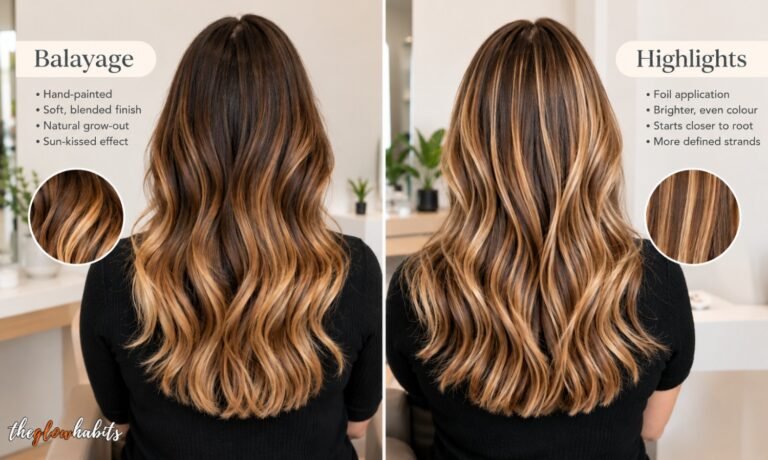
What is the difference between balayage and highlights? Balayage is hand-painted for a softer, blended grow-out, while highlights use foils for brighter, more uniform lift from root to tip.

Choosing between balayage and highlights is not really about which technique is better. It is about which result fits your hair, routine, and idea of beautiful colour. One gives the colourist freedom to paint light through selected areas; the other isolates precise strands for controlled brightness. Both can look natural, both can look bold, and both depend on thoughtful placement.

If you are planning a salon visit, use this guide to compare the finish, maintenance, cost factors, and suitability of each method before you sit in the chair.

Quick Decision

  • Choose balayage for softer root blending, flexible placement, face-framing dimension, and a lived-in finish.
  • Choose highlights for brighter roots, precise strand placement, stronger lift, and a more uniform pattern.
  • Combine both when you want freehand softness with the extra lift or control of foils.

Balayage vs Highlights at a Glance

FactorBalayageHighlights
ApplicationLightener or color is painted freehand onto selected sections.Selected strands are usually isolated and wrapped in foil.
Starting pointOften begins away from the root or is softly feathered near itCan begin close to the scalp and continue from root to tip
Finished lookSoft, blended, sun-kissed, and less uniformBrighter, more even, structured, and clearly defined
Root grow-outUsually appears gradual and diffusedOften creates a more visible line as new hair grows
LiftBest known for controlled surface lightening and dimensionFoil isolation can support stronger, more consistent lift
MaintenanceOften allows more time between major lighting appointmentsUsually needs earlier root maintenance if the color begins at the scalp.
Best suited toSoft dimension, face framing, natural-looking roots, and flexible placementVisible brightness, even color, a light-blonde finish, and accurate placement

What Is Balayage?

Balayage is a freehand hair-colouring technique. The name comes from a French word meaning “to sweep”, which describes how a colourist paints lightener across the surface of chosen sections. Rather than following one strict pattern, the colourist adjusts the angle, saturation, and position of every painted piece. Hair highlighting includes several application methods, and balayage is one of the best-known approaches.

The color is often lighter through the mid-lengths and ends, with a softer transition near the roots. This produces the sun-kissed dimension many clients associate with balayage. It can be subtle, high-contrast, face-framing, full-head, or partial, so balayage describes the application method rather than one fixed result.

Balayage can suit straight, wavy, curly, fine, thick, light, or dark hair when the placement is adapted properly. Texture matters because light catches every curl, wave, and layer differently. A thoughtful colourist paints for the haircut and natural movement instead of copying the same pattern onto every client.

What Are Highlights?

Traditional highlights lighten selected strands from the root area through the ends. A colourist weaves or slices sections, applies lightener or color, and usually encloses each section in aluminium foil. Foil separates the product from nearby hair, allowing the colourist to control exactly where the color goes and how intensely it develops.

Highlights tend to create a more even pattern than balayage. Fine babylights can look delicate and natural, while wider slices or thicker weaves create stronger ribbons of brightness. Lowlights may be added beside highlights to restore depth and contrast rather than making every strand lighter.

Foil highlights are often useful when a client wants a larger color shift, brightness close to the scalp, or a more uniform blonde result. Expert colorists Abby Haliti, George Papanikolas, and Gina Rivera discuss these practical differences in this balayage and highlights comparison.

Seven Key Differences Between Balayage and Highlights

Application

Balayage relies on freehand painting. Highlights rely on sectioning and foil isolation. That distinction changes where light appears, how softly it begins, and how evenly it travels through the hair.

Finished Effect

Balayage usually creates a graduated effect with a softer blend between the natural base and lighter pieces. Highlights normally create clearer, repeated ribbons of brightness. A skilled colorist can make either result subtle or dramatic, so the consultation matters more than the trend name alone.

Brightness and Lift

Foils can help the lightener remain concentrated around a strand, which is useful for stronger or more uniform lift. Balayage is often chosen for dimensional brightness rather than identical lift in every section. Starting color, previous dye, hair condition, and the lightener used will affect the result.

Root Appearance

Balayage is usually blended around or below the roots, creating a softer, more natural-looking grow-out. Traditional highlights commonly begin closer to the scalp, so the contrast between new growth and lightened hair may become visible sooner.

Appointment Timing

Balayage often gives clients more flexibility between major lightening sessions because the root transition is softer. Highlights may need earlier touch-ups when maintaining brightness from the scalp. There is no universal schedule: contrast, growth rate, toning needs, and personal preference all matter.

Customisation

Balayage gives the stylist broad freedom to flatter the face shape, haircut, and natural movement. Highlights give precise control over the number, width, direction, and spacing of lightened strands. Neither method is limited to one hair type.

Cost Factors

The technique name alone does not determine the bill. Hair length, density, starting color, previous dye, amount of lightener, toner, treatment, stylist experience, and appointment time all affect price. If you are comparing a balayage service in Singapore, ask whether the quote includes toner, bond-support treatment, blow-dry, and any follow-up gloss.

What the Service Name Does Not Tell You

“Balayage” and “highlights” describe application choices, but neither word tells you the final tone, exact brightness, health of the hair, total appointment time, or full maintenance cost. Two clients can request balayage and leave with very different results because their starting color, haircut, density, previous dye, and contrast goals are different.

The clearest consultation language combines a technique with a visual result. Instead of asking only for balayage, ask for “soft face-framing brightness with a natural root.” Instead of requesting highlights alone, describe whether you want fine, blended ribbons or bold, high-contrast pieces. This gives the stylist a useful destination rather than a fashionable label.

Which Technique Should You Choose?

Choose Balayage If You Want

  • A soft, sun-kissed finish
  • Dimension that does not follow a rigid pattern
  • Face-framing brightness
  • A gentler-looking root transition
  • More flexibility between major lightening appointments
  • Color placement tailored to layers, curls, or natural movement

Choose Highlights If You Want

  • Brightness that begins close to the scalp
  • A uniform or structured blonde pattern
  • Precise control over every lightened section
  • A stronger shift from dark hair toward a lighter result
  • Fine baby lights, bold slices, or an even distribution of color
  • Predictable placement from root to tip

Can You Combine Balayage and Foils?

Yes. Many colourists combine them when one method cannot create the entire desired result. Foilage uses balayage-style painting with foil processing to increase lift. American tailoring begins with selected foils and adds freehand color between them to soften the finished blend. The names matter less than a clear plan for placement, contrast, and upkeep.

Is Balayage Better Than Highlights for Your Hair?

Neither is automatically better or safer. The right choice depends on your starting color, chemical history, hair condition, desired contrast, and willingness to return for maintenance. Balayage may be the better fit when you prefer a softer grow-out. Highlights may be better when you want brighter roots, even coverage, or a more noticeable transformation.

Hair length can influence the application without deciding it completely. Longer hair gives a colorist more space for a gradual sweep, while shorter hair can benefit from carefully placed foils near the scalp. Texture also changes how the color is seen: on curls, strategic surface pieces may define movement; on straight hair, even small placement differences can appear more obvious.

A professional hair colour consultation should cover your current base, previous color, inspiration photos, maintenance budget, and realistic level of lift. Bring photographs of looks you enjoy, but also explain what you dislike about your current hair. That second detail often helps the stylist more than the inspiration image alone.

Maintenance and Aftercare

Fresh color stays attractive when the maintenance plan is realistic. Ask the colorist when you will need a toner, gloss, root refresh, or full lightening appointment. A gloss can renew shine and refine tone between larger services, while a root-focused appointment may maintain traditional highlights without repeating lightener through already-lightened ends.

Maintenance needBalayageHighlights
Root appearanceUsually grows out with a softer transitionMay show a clearer line when highlights begin at the scalp
Tone and shineA toner or gloss may refresh warmth and shineA toner or gloss may keep blonde pieces balanced and bright
Major lighteningOften scheduled according to the desired contrast and placementOften scheduled around visible root growth and brightness goals
Home routineColor-safe cleansing, conditioning, heat protection, and tone care as neededColor-safe cleansing, conditioning, heat protection, and tone care as needed

At home, choose shampoo and conditioner intended for color-treated hair. Toning shampoo can help manage unwanted warm-looking tones in some blonde results, but it should be used according to the product directions. Too much toning product can leave the color looking flat or temporarily over-toned.

Heat styling and sun exposure can make colored hair feel drier or look less vibrant, so use suitable heat protection and avoid unnecessary high temperatures. A detailed colour-treated hair aftercare guide can support the plan your stylist gives you.

Hair dye and lightener must be used carefully. The U.S. Food and Drug Administration advises consumers to follow label directions, perform the recommended skin test, and avoid coloring an irritated, sunburned, or damaged scalp.

When to Pause Before Lightening

Postpone the service and seek professional advice if the scalp is irritated, sunburned, broken, or reacting to a product. Tell the colorist about recent bleach, permanent dye, relaxers, perms, keratin services, metallic-salt color, or at-home box dye. A strand assessment and an honest chemical history are far more useful than promising a shade that the hair cannot safely reach in one visit.

A Better Way to Decide: The Three-Clock Test

The root clock asks how quickly you notice and dislike new growth. If a visible root line bothers you within a few weeks, soft balayage placement may feel calmer. If you love fresh brightness at the scalp and are comfortable booking regular appointments, foil highlights may give you the crisp result you enjoy. This is not about being high- or low-maintenance; it is about choosing a result that will still feel good halfway through its grow-out.

The salon clock measures time as well as money. Instead of asking only for the price of the first appointment, ask what the full year may involve: lightening sessions, toners, glosses, treatments, trims, and home care. A cheaper first service can become the more demanding option if it needs frequent correction, while a carefully planned color may cost more initially but fit your calendar better.

The style clock considers how long you genuinely want the same visual effect. Balayage is useful when you want evolving, lived-in dimension; highlights suit clients who enjoy a repeated, recognizable pattern of brightness. If you change your mind often, ask for reversible placement around the face before committing to a full transformation. A wise stylist plans not only for the photograph taken today, but also for how the color will look as it grows, fades, and moves with your everyday styling.

Questions to Ask During Your Salon Consultation

  • Which technique works best for my current hair colour and chemical treatment history?
  • How light can my hair safely become in one appointment?
  • Where will the lightest pieces be placed?
  • Will the result look soft, uniform, dimensional, or high-contrast?
  • How will my roots look as the color grows out?
  • What maintenance will I need during the next six months?
  • Does the quoted price include toner, gloss, treatment, and styling?
  • Which home-care products are genuinely necessary?
  • Can we begin with a partial service before committing to full color?

If you are ready to compare a plan with your budget and schedule, review the salon’s hair colour pricing before booking.

Sources and Editorial Notes

This guide separates established technique information from the original “three-clock test” decision framework. It was reviewed for clarity and source accuracy on September 12, 2026. Salon methods and product instructions vary, so the final plan should be confirmed with a qualified colourist who can assess the hair directly.

Frequently Asked Questions

What is the main difference between balayage and highlights?

Balayage is painted freehand to create a softer, graduated blend, while traditional highlights use sectioning and foils to create more even brightness from the root toward the ends.

Is balayage better than highlights?

Neither is universally better. Balayage often suits clients who want natural-looking dimension and softer grow-out, while highlights suit clients who want brighter roots, precise placement, or a more uniform result.

Does balayage require less maintenance than highlights?

Balayage often allows more time between major lightening appointments because its root transition is softer. The actual schedule depends on contrast, hair growth, toner needs, and the finish you want to maintain.

Can balayage and highlights damage hair?

Both techniques can cause damage when lightener is overused or aftercare is poor. Hair health, product strength, processing time, overlapping applications, heat exposure, and previous chemical treatments are more important than the technique itself.

Which option is better for dark hair?

Foil highlights can provide stronger, more even lift, while balayage can create softer contrast and dimension on dark hair. A strand assessment is needed because previous dye and hair condition affect how light the hair can safely become.

Can balayage and foil highlights be used together?

Yes. Hybrid methods such as foilyage combine freehand placement with foil processing, allowing a colourist to create soft placement with additional lift where needed.

Can balayage be done without bleach?

Yes, balayage placement can use permanent or demi-permanent color when the goal and starting shade allow it. Noticeable lightening on darker hair usually requires a lightener, so the formula depends on the current color and desired result.

How much do balayage and highlights cost?

Prices vary by location, hair length, density, starting color, stylist experience, product use, and appointment time. Ask for a quote that states whether toner, treatment, styling, and follow-up maintenance are included.

Final Thoughts

Balayage suits soft, natural dimension and gentler grow-out, while highlights create brighter, more structured colour. The best choice depends on your hair condition, style, budget, and maintenance routine, so confirm the plan through a hair colour consultation before booking.

Best Kindle Unlimited Self-Help Books: Reader Picks

0

What are the best Kindle Unlimited self-help books? The strongest starting points in this guide are You’re Too Good to Feel This Bad for practical change, So Good They Can’t Ignore You for career decisions, and The Happiest Man on Earth for perspective and resilience. Confirm that each title is currently included in your regional Kindle Unlimited catalogue before borrowing it.

Kindle Unlimited can make a reading habit much easier to maintain. You do not need a Kindle device: the Amazon Kindle app lets you read on a compatible phone or tablet, which is useful when you are waiting in line or have only a few quiet minutes. The convenience matters because a book cannot change anything while it remains unopened.

I built this guide by looking beyond attractive covers and ambitious promises. The strongest books here gave me a useful idea, a practical next step, or a different way to understand a familiar problem. Some were excellent, some had clear limitations, and one worked better as a quick introduction than a complete guide. Those differences are included because an honest recommendation should help you choose, not merely persuade you to download everything.

Kindle Unlimited availability note: Titles can enter or leave the catalogue, and availability may differ by country. Check for the Kindle Unlimited badge in your own Amazon marketplace before borrowing any book in this guide.

Quick Comparison

BookBest forMain strengthRating in this guideKindle Unlimited status
You’re Too Good to Feel This BadPractical whole-life improvementClear advice across mind, body, habits, and lifestyle5/5Included when reviewed; recheck locally
So Good They Can’t Ignore YouCareer directionA skills-first alternative to “follow your passion”5/5Included when reviewed; recheck locally
The Happiest Man on EarthPerspective and resilienceMemorable life wisdom delivered through memoir5/5Included when reviewed; recheck locally
The Subtle Art of Not Giving a F*ck* by Mark Manson Values and accountabilityBlunt, readable mindset advice5/5Included when reviewed; recheck locally
The SourceCurious manifestation skepticsConnects attention and behavior with neuroscience4/5Included when reviewed; recheck locally
How to Do the WorkPatterns, boundaries, and self-awarenessExercises grounded in a holistic framework4/5Included when reviewed; recheck locally
The Art of Letting GoEmotional release and acceptanceShort journal exercises that encourage action4/5Included when reviewed; recheck locally
Dopamine DetoxFocus and digital distractionA fast introduction with simple action plans3/5Included when reviewed; recheck locally
The 7 Habits of Highly Effective PeoplePrinciples and relationshipsA durable framework for personal effectivenessNot separately ratedCheck your current marketplace
Think and Grow RichGoals and persistenceA classic philosophy of purpose and sustained effortNot separately ratedCheck your current marketplace
Atomic HabitsBuilding and breaking habitsA clear system for behavior changeNot separately ratedCheck your current marketplace
The Power of NowPresence and mindfulnessAn accessible introduction to present-moment awarenessNot separately ratedCheck your current marketplace
Man’s Search for MeaningPurpose during hardshipA profound account of meaning and responsibilityNot separately ratedCheck your current marketplace

Choose a Book by Your Goal

If you want to…Start with…Why it fits
Improve several areas of daily lifeYou’re Too Good to Feel This BadIt combines practical guidance on mindset, habits, health, and lifestyle.
Make a clearer career decisionSo Good They Can’t Ignore YouIt replaces vague passion advice with a skills-first career strategy.
Build perspective and gratitudeThe Happiest Man on EarthIts memoir-based lessons connect resilience with friendship and responsibility.
Clarify your values and prioritiesThe Subtle Art of Not Giving a F*ck* by Mark Manson It explains how values guide attention, accountability, and meaningful choices.
Understand patterns and boundariesHow to Do the WorkIts exercises support self-observation, reparenting, and healthier limits.
Reduce distractions and regain focusDopamine DetoxIt provides a short attention audit and simple action plans.
Create a repeatable habit systemAtomic HabitsIts four-law framework makes behavior change easier to understand and apply.
Find meaning during hardshipMan’s Search for MeaningIt examines purpose, responsibility, and the human response to suffering.

How These Books Were Chosen

The eight numerically rated titles in this guide were identified as Kindle Unlimited books when they were originally reviewed. The remaining five are clearly separated as supplementary self-improvement classics to check in your current marketplace. Because the catalog can change by date and country, no historical inclusion claim is presented as a guarantee of present availability.

Each review was evaluated for relevance to a specific reader goal, clarity of its central idea, practical application, credibility or evidence alignment, important limitations, and overall reader fit. A 5/5 rating indicates a strong recommendation for its intended reader, 4/5 indicates a valuable book with a notable limitation, and 3/5 indicates a useful introduction that is not comprehensive. Only books that received a numerical rating in the original reading notes retain one here; the supplementary titles are marked “Not separately rated” rather than being assigned a score after the fact.

A Simple Test for Choosing the Right Book

The best way to choose a self-help book is to focus on the challenge you want to overcome rather than how popular the book is. A book about habits makes sense when you need a repeatable routine, while a book about meaning may serve you better when you feel directionless. If work is causing the pressure, choose a career book instead of another general confidence guide. One clear goal prevents a long reading list from becoming another form of procrastination.

Here is the four-part test I recommend: relevance, credibility, action, and follow-through. The right book should describe your current problem accurately, explain its reasoning without hiding behind jargon, offer at least one safe action you can try this week, and make that action realistic enough to repeat. If a chapter leaves you inspired but unable to identify your next step, it has entertained you more than it has helped you.

Before borrowing a title, read the sample and ask three questions: Did I learn something specific? Do I trust the author’s reasoning? Can I apply one idea within seven days? Then confirm that the book is still included in your regional Kindle Unlimited catalog. This short test filters out vague promises and helps you choose a book that has a genuine chance of improving your daily life.

Practical and Career Growth Books

You’re Too Good to Feel This Bad by Dr. Nate Dallas

Rating: 5/5. Best for: readers who want practical improvements across health, thought, money, habits, and daily routines.

Dr. Nate Dallas is a dentist whose book moves confidently across the mind, body, and lifestyle. A Google Books listing summarizes its unusually broad scope, while an author interview gives more context about his approach. Despite that range, the advice rarely feels vague or mystical. Most suggestions can be added to an ordinary day without rebuilding your entire life.

The strongest lesson is the difference between naming a problem and solving it. Dallas repeatedly returns responsibility to the reader: notice harmful thoughts before they demand a rescue, stop using limited resources as an excuse for avoiding resourcefulness, and be honest about whether you are genuinely trying. His picture of the mind as an overcrowded storage space is especially effective because it turns mental clutter into something visible and manageable.

What you will take away: Small habits become useful when they are attached to a realistic plan and repeated with discipline. Awareness matters, but action is what changes the result.

Possible limitation: The book covers many subjects, so readers seeking a deep clinical treatment of one issue may need a more specialized resource.

So Good They Can’t Ignore You by Cal Newport

Rating: 5/5. Best for: students, early-career professionals, and anyone considering a passion-driven career change.

Cal Newport challenges the comforting instruction to “follow your passion.” His argument, outlined on his official books page, is that satisfying careers are more often built by becoming skilled at something valuable and then using that career capital to earn greater control, meaning, and freedom. It is a less romantic message, but it is much more useful when a person has not yet developed rare abilities.

The book is logical and carefully structured. Each chapter builds on the last, and the summaries help the argument stay clear. Newport’s ideas about “open gates” are particularly practical: existing opportunities often move a career forward faster than starting from nothing in a completely new field. The mission section is equally strong because it explains why meaningful work usually becomes visible only after someone reaches the edge of a field.

What you will take away: Working well can be more productive than endlessly searching for perfect work. Skill creates options, and options create leverage.

Possible limitation: The concept of career capital needs more examples across different jobs and industries. Readers may understand the principle before knowing exactly what it looks like in their own role.

Stephen R. Covey’s The 7 Habits of Highly Effective People

Best for: readers who want one framework connecting personal responsibility, relationships, leadership, and renewal.

Few self-help systems have remained as coherent as Stephen R. Covey’s seven habits. The FranklinCovey overview presents the framework as a movement from dependence to independence and then interdependence. That sequence is what makes the book more than a collection of productivity tips: it asks you to govern yourself before trying to influence other people.

The first three habits—be proactive, begin with the end in mind, and put first things first—develop responsibility, direction, and disciplined priorities. The next three move into relationships through win-win thinking, listening before demanding to be understood, and synergy. The seventh habit, sharpening the saw, protects the physical, emotional, mental, and spiritual energy needed to sustain everything else.

What you will take away: Personal effectiveness and interpersonal effectiveness are connected. A clear life direction matters, but so do listening, cooperation, and renewal.

Possible limitation: Some examples and language can feel dated, and readers looking for a short tactical guide may find the principle-based approach slower than expected.

Think and Grow Rich by Napoleon Hill

Best for: readers interested in goal clarity, persistence, confidence, and the psychology of ambition.

Published in 1937, Think and Grow Rich remains influential because its central questions are still recognizable: What do you want, how strongly do you want it, and what are you willing to do repeatedly when progress is slow? Napoleon Hill organizes the book around thirteen principles, including desire, faith, specialized knowledge, decision, persistence, and organized planning.

The mastermind principle is one of its most durable ideas. Hill argues that cooperation among committed people can produce knowledge, encouragement, and momentum that an isolated person may struggle to create. The book also applies its philosophy beyond money to work, relationships, and personal improvement.

What you will take away: A clear goal becomes more useful when it is supported by persistent action, a definite plan, and people who strengthen rather than weaken your commitment.

Possible limitation: Some claims reflect the era in which the book was written and should be treated as motivational philosophy rather than modern scientific evidence.

Mindset, Meaning, and Emotional Growth Books

The Happiest Man on Earth by Eddie Jaku

Rating: 5/5. Best for: readers seeking perspective, gratitude, resilience, and wisdom grounded in lived experience.

The Happiest Man on Earth: The Beautiful Life of an Auschwitz Survivor does not resemble a conventional self-help manual, and that is precisely why it is so affecting. Google Play Books describes Eddie Jaku as a Holocaust survivor who lived to 101. Rather than presenting a polished sequence of life hacks, he lets experience carry the lesson.

The book is a relatively quick read, but its ideas stay with you. Jaku writes about education, work ethic, friendship, family, and the power of perspective. His reflections on his mother are painful, while his view of happiness is active rather than sentimental: happiness is something we recognize, practice, and share. The book never denies suffering; it demonstrates that suffering does not have to become the only truth about a life.

What you will take away: Gratitude is not ignorance of pain. It is the decision to keep seeing love, friendship, and responsibility alongside it.

Possible limitation: Readers looking for exercises or a step-by-step system will not find them here. The learning comes through memoir, reflection, and moral example.

Mark Manson’s The Subtle Art of Not Giving a F*ck

Rating: 5/5. Best for: readers who want blunt guidance about values, responsibility, identity, and priorities.

Do not let the title decide for you. Mark Manson’s official book page presents a deliberately counterintuitive guide to living well, but beneath the sarcasm is a serious argument: attention is limited, so a good life depends on choosing what deserves it. The book is conversational, witty, darkly funny, and far more grounded than its provocative packaging suggests.

Manson is especially good at naming patterns people feel but cannot explain. He separates responsibility from fault, shows how entitlement can appear as either victimhood or a need to be the hero, and argues that values give life direction when circumstances become unstable. His “law of avoidance” is equally useful: threats to identity are often the very subjects people work hardest not to examine.

What you will take away: You cannot care about everything equally. Better values help you choose meaningful problems and respond to them without confusing blame with responsibility.

Possible limitation: The profanity and deliberately abrasive voice will not suit every reader, even when the underlying ideas are thoughtful.

The Source by Tara Swart, MD, PhD

Rating: 4/5. Best for: readers curious about manifestation who prefer a more analytical discussion of attention, behavior, and the brain.

The full title sounds mystical, but The Source is strongest when Tara Swart interprets familiar manifestation practices through neuroscience and psychology. An MIT Sloan profile identifies her as a neuroscientist and Senior Lecturer. She uses ideas such as selective attention, visualization, emotional intelligence, and neuroplasticity to explain how thought can influence what we notice and how we behave.

The most valuable sections are not promises that thought alone changes external reality. They are the chapters that ask whether the brain is choosing its focus well and whether sleep, stress, food, and exhaustion are weakening that choice. The National Heart, Lung, and Blood Institute explains that sleep deficiency can affect focus, learning, decision-making, and emotional control, which supports the book’s practical emphasis on caring for the brain.

What you will take away: Attention influences which opportunities you notice and which actions you repeat. Visualization works best when it motivates you to take action instead of serving as a substitute for it. 

Possible limitation: Established neuroscience does not prove that thoughts alone control outside events. Skeptical readers should separate the book’s evidence-based explanations from its broader interpretation of manifestation.

How to Do the Work by Dr. Nicole LePera

Rating: 4/5. Best for: reflective self-starters interested in patterns, attachment, boundaries, reparenting, and mind-body awareness.

The publisher’s book page identifies Dr. Nicole LePera as the author behind How to Do the Work: Recognize Your Patterns, Heal from Your Past, and Create Your Self. Known online as The Holistic Psychologist, she connects mental, physical, and spiritual habits in one self-directed framework. Topics include attachment styles, stress, trauma bonds, boundaries, ego awareness, reparenting, and inner-child work.

The exercises are the practical heart of the book. Each chapter asks readers to move from recognition into observation and then into behavior. I found the examples meaningful, although the personal history will connect more strongly with some readers than others. The distinction between an ultimatum and a boundary is one of its clearest lessons: a boundary defines what you will do to protect a need, rather than trying to control another person’s response.

What you will take away: Sustainable change begins with recognizing repeated patterns, acknowledging earlier wounds, and practicing clear limits without abandoning compassion.

Possible limitation: A self-help book is not a substitute for individual treatment of severe or layered trauma. NIMH guidance explains when and how to seek qualified professional support.

Focus and Letting-Go Books

The Art of Letting Go by Damon Zahariades

Rating: 4/5. Best for: readers who prefer short exercises for acceptance, emotional awareness, priorities, and personal agency.

This is a quick, action-focused book divided into three parts. Rather than taking a deep dive into psychology, Damon Zahariades emphasizes emotional regulation, non-attachment, self-ownership, and self-forgiveness. Most exercises are journal prompts that take roughly five to thirty minutes and help readers identify patterns, reframe experiences, clarify values, and release what no longer deserves their energy.

Two exercises are especially practical. A time budget reveals how little genuinely free time remains after responsibilities, making it easier to refuse obligations that conflict with important priorities. A written list of safe, enjoyable activities creates a self-care toolkit that can redirect attention away from something that cannot be controlled or changed.

The later discussion of blame and agency is more demanding. Zahariades argues that repeatedly assigning every problem to other people can deepen powerlessness. Taking responsibility does not mean accepting blame for everything; it means reclaiming the ability to choose the next response.

What you will take away: Letting go is not denial. It is the process of recognizing an emotion, understanding it, accepting what cannot be changed, and acting where choice remains.

Possible limitation: The journal exercises may support ordinary emotional work, but they are not designed to treat deep-rooted trauma. People experiencing serious distress should seek appropriate professional care; NIMH provides guidance on trauma and PTSD.

Dopamine Detox by Thibaut Meurisse

Rating: 3/5. Best for: readers who want a short introduction to attention, overstimulation, and distracting digital habits.

At only 64 pages in the edition reviewed, Dopamine Detox is closer to a focused overview than a complete examination of brain science. It is simply written, easy to finish in under an hour, and organized around several action plans based on how much time a reader can dedicate. That brevity is useful for beginners, although more demanding readers will want deeper research.

The book’s strongest distinction is between fulfillment and excitement. One supports long-term satisfaction; the other can become a chase for immediate stimulation. Its practical questions ask readers to identify the single activity that harms focus most, reduce highly stimulating distractions, and make quiet or tedious work easier to approach.

Dopamine is more complex than the popular phrase “pleasure chemical” suggests. The Cleveland Clinic’s dopamine overview describes it as a neurotransmitter involved in motivation, learning, attention, and other functions. A peer-reviewed study indexed by PubMed also distinguishes dopamine activity during reward anticipation from peak pleasurable experience.

What you will take away: A useful “dopamine detox” is not an attempt to remove dopamine. It is an attention audit that reduces avoidable stimulation and restores room for deliberate work.

Possible limitation: I disagreed with the suggestion that exercise should be paused during the challenge. Healthy movement should not be treated as equivalent to compulsive digital stimulation.

Popular Classics to Check in Your Marketplace

The following books are valuable additions to a self-improvement reading list, but Kindle Unlimited catalogs change. Confirm that each one carries the Kindle Unlimited badge in your marketplace before presenting it as currently included.

Atomic Habits by James Clear

Best for: readers who want a practical system for building good habits and breaking bad ones.

James Clear’s official Atomic Habits resources turn behavior change into four memorable laws: make a good habit obvious, attractive, easy, and satisfying. The matching habit loop—cue, craving, response, and reward—helps explain why some behaviors repeat automatically while others collapse after a few days.

What makes the framework useful is its attention to environment and identity. Clear does not ask readers to depend on motivation forever. He encourages them to make helpful actions easier, unhelpful actions harder, and every small repetition evidence of the person they want to become.

What you will take away: Lasting improvement usually grows from a system that makes the desired behavior easier to repeat, not from one dramatic burst of willpower.

Possible limitation: The four-law structure is intentionally simple. Complex behavioral or clinical difficulties may require support beyond habit design.

The Power of Now by Eckhart Tolle

Best for: readers interested in mindfulness, presence, inner quiet, and spiritual reflection.

The Power of Now centers on a direct but difficult practice: returning attention to the present instead of living continuously inside regret, anticipation, and mental commentary. Eckhart Tolle describes the ego as an identity built from thought and asks readers to notice that voice without automatically treating it as reality.

The book draws from spiritual traditions, including Buddhism and Christianity, while keeping its central practice accessible. Its value is less about memorizing ideas and more about observing the mind during ordinary moments. When it works, the book makes mindfulness feel immediate rather than ceremonial.

What you will take away: Presence begins when you notice thought without allowing every thought to direct your next action.

Possible limitation: The spiritual language can feel abstract, and readers looking for conventional psychology or research-heavy explanations may prefer another book.

Man’s Search for Meaning by Viktor E. Frankl

Best for: readers seeking purpose, resilience, and an honest examination of suffering.

Written by psychiatrist and Holocaust survivor Viktor E. Frankl, Man’s Search for Meaning combines his experience in Nazi concentration camps with an introduction to logotherapy. The first part describes suffering and dehumanization without reducing prisoners to symbols. The second develops Frankl’s belief that the search for meaning is a fundamental human concern.

This is not a cheerful book, yet it is deeply life-affirming. Frankl does not claim that suffering is automatically good or that every tragedy can be repaired through attitude. His argument is more careful: when circumstances cannot be changed, a person may still retain some responsibility for how to meet them and what meaning to carry forward.

What you will take away: Meaning can come from work, love, responsibility, and the stance a person takes toward unavoidable suffering.

Possible limitation: Because the historical material is severe, some readers may need to approach it slowly and with emotional care.

Frequently Asked Questions

Can you read Kindle Unlimited books without a Kindle?

Yes. You can read Kindle Unlimited titles in the Kindle app on a compatible phone, tablet, or computer; a Kindle device is optional.

How do you choose the right Kindle Unlimited self-help book?

Choose the book that matches your immediate goal, read the sample, check the author’s credibility, and look for one exercise or idea you can apply within seven days.

Are Kindle Unlimited books included permanently?

No. The Kindle Unlimited catalog can change and may differ by marketplace, so check for the Kindle Unlimited badge before borrowing a title.

Are all 13 books in this guide currently on Kindle Unlimited?

Not necessarily. Eight books were included when originally reviewed, while five are supplementary classics to check in your current marketplace. Confirm every title’s current status before borrowing it.

Is Kindle Unlimited worth it for self-help books?

It can be. Kindle Unlimited offers good value when your regional catalog includes several books you genuinely plan to read and the monthly fee costs less than buying them separately. Check the current selection before subscribing and reassess it when your reading goals change.

Which self-help book should a beginner read first?

Start with the book that addresses your most urgent problem in the clearest language. A focused choice is more useful than selecting the most famous title.

Can a self-help book replace therapy?

No. Self-help books can support reflection and healthy habits, but they do not replace qualified professional care for severe, persistent, or disabling mental-health symptoms.

Final Thoughts

The best Kindle Unlimited self-help books match your current goals and offer practical lessons. Choose one book, apply its advice consistently, and confirm its availability before borrowing.

10 Best Thrillers on Kindle Unlimited That Will Keep You Up

0

What are the best thrillers on Kindle Unlimited? This guide’s top picks are Things We Do in the Dark, The Girl Who Lived, Imaginary Strangers, The Girl in Cabin 13, Summit Lake, Pretty Girls, The Perfect Child, My Sister’s Grave, No Exit, and The Housemaid.

Kindle Unlimited is a monthly subscription service that gives readers access to a large, regularly updated collection of ebooks. You do not need a Kindle device to use it; the Kindle app also works on a phone or tablet. That convenience has changed the way I read. I can open a book while waiting in line, fill ten quiet minutes, and finish far more thrillers than I did when I had to carry every book in paperback.

The ten books below are the ones that stayed with me after the final page. Most earned five stars from me, but they do not offer the same experience. Some are quick and twist-heavy, while others take their time with character, atmosphere, or moral questions. My notes on pacing, point of view, darker themes, and content can help you find a book that fits your mood and reading preferences.

Availability note: Kindle Unlimited titles can change by date and region. Check the current Amazon listing for the “Read for Free” or Kindle Unlimited label before downloading.

Quick Picks

BookMy ratingBest forPaceContent note
Things We Do in the Dark5/5Complex characters and book clubsMeasuredChild abuse and rape
The Girl Who Lived5/5A cinematic mystery with an earned twistQuickCheck current content warnings
Imaginary Strangers5/5Unease, uncertainty, and psychological tensionBalancedDifficult and disturbing sections
The Girl in Cabin 135/5A reading slump or single-POV fansFastChilling themes and nightmare fuel
Summit Lake5/5A layered, slow-burn mysterySlow burnIntense opening and dark themes
Pretty Girls5/5Experienced crime-thriller readersBuilds steadilyGraphic violence and disturbing material
The Perfect Child4/5Believable characters and dark family suspenseMixedVery disturbing scenes
My Sister’s Grave5/5A mature detective story with emotional depthSteadyReview current content warnings
No Exit5/5A one-sitting survival thrillerVery fastGruesome scenes and graphic violence
The Housemaid5/5Short chapters and domestic suspenseVery fastReview current content warnings

Jennifer Hillier’s Things We Do in the Dark: Book Review

My rating: 5/5 stars

Jennifer Hillier does not miss. This was the third of her books I had read, and it became my favorite. It is longer than many Kindle Unlimited thrillers, yet the length has a purpose: the characters receive real development, the flashbacks deepen the story, and every major subplot is answered by the end.

The heavier material was hard for me to read. Content warnings include child abuse and rape. Those subjects are handled honestly and serve the plot rather than appearing only for shock value, but sensitive readers should still check detailed warnings before starting.

What impressed me most was the care behind the writing. The characters feel complicated and human, and the book gives readers plenty to discuss about morality, trauma, and the line between right and wrong. That makes it one of the strongest book-club choices on this list.

The Girl Who Lived by Christopher Greyson

My rating: 5/5 stars

I finished The Girl Who Lived overnight and immediately wished it were a movie. Christopher Greyson’s storytelling is vivid enough to make each scene easy to picture, while the pace stays quick even though the chapters are a little longer than those in many subscription thrillers.

The main character can make frustrating choices, but I still found myself rooting for her. Almost everyone felt suspicious, and I kept revising my list of potential suspects. That uncertainty creates suspense without relying on a cheap cliffhanger at the end of every chapter.

Most importantly, the final twist makes sense. It is surprising, but the earlier details support it. After reading many thrillers with careless left-field endings, I appreciated a story that respected the reader and earned its reveal.

Imaginary Strangers by Minka Kent

My rating: 5/5 stars

Imaginary Strangers hooked me from the opening and never loosened its grip. The plot centers on a sociopathic mother who will do almost anything to protect her young children. Minka Kent treats that psychology in a believable, researched, and surprisingly informative way without losing the force of the story.

The pacing feels carefully controlled. Kent builds an atmosphere of unease and uncertainty rather than rushing from one twist to another. I read a great many thrillers, and this one still kept me changing my mind about where it was headed.

Check the trigger warnings first. Some sections are difficult and the subject matter is heavy. Readers who are comfortable with dark psychological fiction, however, will find a tense and memorable book here.

A.J. Rivers’s The Girl in Cabin 13

My rating: 5/5 stars

The Girl in Cabin 13 is one of my all-time favorite FBI thrillers. It was so unsettling that it actually gave me nightmares long after I finished reading. The story follows one main perspective, which makes it especially easy to follow for readers who dislike multiple points of view or have trouble keeping track of a large cast.

Emma Griffin can be naive, impulsive, and annoying, yet those flaws never ruined the story for me. The tension begins on the first page, the short chapters keep it moving, and the central twist is chilling without feeling random. I read the book twice, which is rare for me with a mystery.

This is my pick for anyone trying to break a reading slump. It is quick, focused, and difficult to set down—the sort of thriller made for a cold winter weekend.

Summit Lake by Charlie Donlea

My rating: 5/5 stars

Summit Lake was my first Charlie Donlea novel, and it turned him into one of my favorite thriller writers. The opening is intense, but the larger book is a slow burn. Tension grows with every chapter until a final twist I did not see coming.

Multiple perspectives and timelines can make a thriller feel untidy. Here, the past and present fit together deliberately, and the details that once looked small become part of an engrossing mystery. The result feels polished rather than crowded.

I also enjoy the subtle way characters can reappear across Donlea’s books without spoiling the separate mysteries. That continuity rewards regular readers. The Girl Who Was Taken is another favorite, but Summit Lake remains the natural place to begin because it was his debut.

Pretty Girls by Karin Slaughter

My rating: 5/5 stars

Karin Slaughter’s Pretty Girls is a true psychological thriller: dark, graphic, and deeply unsettling. It reminded me of Criminal Minds, but the violence is more explicit than some readers will want. Review the content warnings before deciding whether this book is right for you.

Even if you read a great deal of crime fiction, the plot feels fresh rather than overworked. It uses several perspectives, yet the narrators are distinct enough that I never struggled to tell them apart. The twists keep coming, and the suspense continues to build through the final pages.

This is a strong weekend read for someone who wants an intense book and has time to disappear into it. It can also create a thoughtful book-club conversation about trauma, loyalty, survival, and the choices people make under pressure.

The Perfect Child by Lucinda Berry

My rating: 4/5 stars

The Perfect Child is very dark and very disturbing. I had to skip a few scenes, so reading the synopsis and checking trigger warnings first is essential. The story doesn’t shy away from difficult themes, so it may not appeal to every thriller reader.

What works is the realism. The characters feel believable and drive the story forward, while each scene adds another layer of tension. The pace is unusual: parts move quickly, but other sections feel drawn out, partly because the subject matter is so heavy.

This came close to a five-star rating. The final chapters fell short for me, even though the ending is consistent with Lucinda Berry’s style. The strong beginning, credible character work, and steady unease still make it worth recommending—with a serious content warning attached.

My Sister’s Grave by Robert Dugoni

My rating: 5/5 stars

My Sister’s Grave has the satisfying charm of a classic detective story, with a touch of nostalgia. Robert Dugoni’s writing is solid, the investigation develops clearly, and the book avoids the trendy references that can make a contemporary thriller feel dated within a few years.

At its heart, the story focuses on Tracy Crosswhite’s bond with her sister. I do not have a sister, yet I still felt deeply invested in that bond. The characters have depth, and the family story matters as much as the mystery.

There is tension and suspense without wild, exhausting drama. The book feels mature without becoming dull or stale. I recommended it to my mother, who is a selective reader, and she enjoyed it too—a good sign that its appeal reaches beyond devoted thriller fans.

No Exit by Taylor Adams

My rating: 5/5 stars

Taylor Adams’s No Exit follows a college student trapped at a snowy rest stop while a dangerous crime unfolds around her. The young protagonist adds a young-adult feel to the story, but the graphic violence makes it better suited to mature readers.

Once I began, I was hooked and couldn’t stop until I was done. It is fast, tense, and packed with turns. I saw a few twists coming, but that never weakened the suspense because the execution and payoff still worked. Unlike some thrillers that begin brilliantly and collapse at the end, this one stays strong through the last page.

The story felt like a movie unfolding on the page, bringing to mind survival-horror films like House of Wax and Wrong Turn. Although it was later adapted for Hulu, I’d recommend reading the book first to experience the full intensity of the story.

The Housemaid by Freida McFadden

My rating: 5/5 stars

Freida McFadden is one of the most recognizable thriller authors associated with Kindle Unlimited, and The Housemaid shows why. Its short chapters and fast pacing make it easy to finish in a couple of days—or overnight if you keep telling yourself “one more chapter.”

The story is a roller coaster from beginning to end, and its final stretch delivers. Some of McFadden’s books can feel more predictable after you become familiar with her patterns, but this one represents her at her best. If you enjoyed Colleen Hoover’s Verity, this book delivers a similarly addictive domestic thriller, with what I found to be greater depth and richer detail.

My other McFadden recommendations are Ward D, Never Lie, The Inmate, The Boyfriend, and The Coworker. My personal skip list is One by One, Do Not Disturb, The Crash, and The Teacher. The last of those lost me because of the way its teacher-student relationship was handled, although many readers feel differently.

How to Choose Your Next Kindle Unlimited Thriller

A star rating can show how much a reader enjoyed a book, but it won’t tell you whether it matches your current mood or reading preferences. Start with pace and tolerance for darkness. Choose No Exit, The Housemaid, or The Girl in Cabin 13 when you want immediate momentum. Pick Summit Lake or My Sister’s Grave when you would rather settle into a patient mystery with careful character work.

The number of twists matters less than the quality of the payoff. A good twist reshapes how you understand earlier clues, while a weak one feels completely unexpected and disconnected from the story. The Girl Who Lived, Summit Lake, and The Girl in Cabin 13 stand out for their unexpected twists that keep you guessing while still making sense in hindsight.

Choosing the right content is just as important as finding a story that matches your interests. Pretty Girls, The Perfect Child, and Things We Do in the Dark deal with material that may be too graphic or painful for some readers. Checking a content guide is not spoiling the book; it is choosing the reading experience you actually want. Finally, confirm each title’s current Kindle Unlimited status before downloading, because subscription catalogs can change over time and across regions.

Frequently Asked Questions

Which Kindle Unlimited Thrillers Are Worth Reading?

The best thrillers in this guide are Things We Do in the Dark, The Girl Who Lived, Imaginary Strangers, The Girl in Cabin 13, Summit Lake, Pretty Girls, The Perfect Child, My Sister’s Grave, No Exit, and The Housemaid.

Which Kindle Unlimited thriller is best for a fast read?

No Exit is the best choice for a fast, high-pressure read, while The Housemaid is ideal for readers who prefer short chapters and domestic suspense.

Which thriller is best for a slow-burn mystery?

Summit Lake is the strongest slow-burn pick because its timelines, clues, and tension build gradually toward an unexpected final reveal.

Which book is best for a book club?

Things We Do in the Dark is the best book-club choice because its complex characters and moral questions give readers substantial material to discuss.

Which books have the darkest content?

Pretty Girls, The Perfect Child, and Things We Do in the Dark contain the darkest material in this guide, so readers should check detailed content warnings first.

Can I read Kindle Unlimited books without a Kindle?

Yes. You can read Kindle Unlimited books through the Kindle app on a compatible phone or tablet without owning a Kindle device.

Is Kindle Unlimited worth it for thriller readers?

Kindle Unlimited can be worth it for thriller readers who finish several included books each month, but the value depends on reading frequency and the current catalog.

Are these books always included with Kindle Unlimited?

No. Kindle Unlimited availability can change by region and date, so confirm the current Amazon listing before choosing a book.

Final Thoughts

The best thriller is the one that matches your mood, whether you want the fast tension of No Exit, the slow mystery of Summit Lake, or the sharp domestic suspense of The Housemaid. Check the content warnings and current Kindle Unlimited availability, choose your next read, and prepare for a story that may keep you awake long after the final page.

Ceramic vs Titanium Curling Iron: Proven Guide

0

Ceramic vs. titanium curling irons: Which one is right for your hair? Ceramic is usually the gentler, more forgiving choice for fine, damaged, or frequently styled hair, while titanium often suits thick, coarse, or hard-to-curl hair when used with careful temperature control.

Curling irons have changed a great deal since the hand-me-down Conair titanium iron I started using in middle school. That tool lasted 15 years before the buttons failed, so I assumed replacing it would be simple. It was not. With fine, stick-straight hair, I could not reproduce my stylist’s results at home until I stopped asking which material was universally better and started asking which tool fit my hair, routine, and desired hold.

That distinction matters. Ceramic and titanium describe part of a curling iron’s construction, but the material name alone does not determine safety or performance. The heater, temperature sensor, barrel coating, minimum setting, section size, contact time, and condition of your hair all influence the result.

Ceramic vs Titanium Curling Iron at a Glance

There is no one-size-fits-all winner. Ceramic is the sensible starting point for most people who value controlled, regular styling, while titanium can be useful when resistant hair needs efficient heat and stronger curl retention. These are tendencies, not guarantees; two well-designed tools made from different materials can perform more similarly than two poorly and well-designed tools carrying the same material label.

Comparison pointCeramic curling ironTitanium curling iron
Typical heat behaviorOften designed for steadier, more even heatOften designed for rapid heating and quick heat recovery
Best starting matchFine, fragile, color-treated, damaged, or frequently styled hairThick, coarse, dense, healthy, or hard-to-curl hair
ForgivenessUsually easier for beginners and careful everyday stylingLess forgiving if the iron becomes very hot quickly
Curl finishOften associated with smooth, polished curlsOften chosen for firm, long-lasting curl formation
Styling paceMay take longer to preheatOften reaches the selected setting faster
Main cautionCeramic coatings can gradually wear down or chip, exposing the underlying material.Rapid high heat can encourage unnecessary temperature or repeated exposure
PriceAvailable at budget and premium pricesAvailable at budget and premium prices
Best useRegular styling at the lowest effective heatOccasional or efficient styling of resistant hair with close heat control

The most important takeaway is simple: hair condition comes before hair type. Thick hair that is bleached, brittle, or already breaking should not be treated like healthy coarse hair merely because it feels dense. Likewise, fine hair that resists every curl may need better sectioning, cooling, and hold technique before it needs a hotter tool.

How Ceramic Curling Irons Perform

A ceramic curling iron features a ceramic barrel, a ceramic-coated surface, or a heating system that uses ceramic technology. Those constructions are not interchangeable. A solid or thicker ceramic component may retain its surface characteristics longer than a thin coating, but heater quality and temperature regulation still matter more than a vague “ceramic” label.

Ceramic benefits

Ceramic models are commonly built to spread heat steadily across the barrel. That controlled feel can make them easier to use on fine hair, fragile strands, color-treated hair, or hair styled often. A smooth, intact surface may also reduce snagging and make product residue easier to clean away.

Many ceramic styling tools also feature ionic technology, which helps reduce frizz and enhance shine for a smoother finish. Treat that as a model-specific feature rather than a property every ceramic iron automatically delivers. Titanium tools can also include ionic technology, so “negative ions” should not be the deciding factor without a clear specification from the manufacturer.

For regular home styling, ceramic’s practical advantage is predictability. I reach for it when I want a polished finish, when humidity or static makes frizz more noticeable, or when I expect to take photos and care more about smoothness than maximum hold.

Ceramic drawbacks

Some ceramic irons take longer to preheat than comparable titanium models. Ceramic-coated barrels can also wear over time, particularly when the coating is thin, repeatedly scraped, or cleaned with abrasive products. Inspect the barrel periodically and stop using a tool that is chipped, rough, or catching hair.

Ceramic irons may not be the best choice for very straight, hard-to-curl hair. In my experience, they create smooth, polished curls, but the results don’t always last as long on fine, straight hair as they do with a titanium iron set to the right temperature. That does not justify jumping to the highest setting; it means curl preparation and cooling should be tested before increasing heat.

How Titanium Curling Irons Perform

Titanium curling irons use titanium in the barrel surface or coating and are often marketed for fast heat-up, durability, and lightweight handling. Titanium itself is strong, relatively light, and highly corrosion-resistant, according to the Royal Society of Chemistry. A curling iron’s real-world durability, however, still depends on how much titanium it contains, the coating quality, and the overall construction.

Titanium benefits

A responsive titanium tool can be valuable for thick, coarse, dense, or hard-to-curl hair because it tends to regain heat quickly between sections. This efficiency can help set curls more effectively, reducing the need to repeatedly style the same section of hair. Lightweight construction can also reduce arm fatigue when styling a large amount of hair.

Titanium has given my stick-straight hair the most dependable long-lasting curl, particularly for an event. My old Conair iron was inexpensive, consistent, and unusually durable. That personal result is useful evidence for my hair—not proof that titanium is best for everyone.

Titanium drawbacks

Fast heat is both the attraction and the risk. A curling iron that heats up rapidly leaves less time to realize the temperature is set too high. Poor temperature regulation or a worn surface can also produce inconsistent styling, snagging, dryness, frizz, or breakage. Hot spots are not exclusive to titanium, but rapid high heat makes careful handling especially important.

Titanium is therefore a better fit for someone who understands their hair’s response, watches contact time, and uses the lowest setting that produces the desired curl. Fine, bleached, fragile, or already damaged hair generally needs a more cautious approach, regardless of the material printed on the box.

A Practical Three-Check Decision Method

First, check condition rather than relying on texture labels. Run your fingers along a clean, dry strand and consider recent bleach, color, chemical services, split ends, roughness, and breakage. If the hair is compromised, choose the more controllable tool and the lowest effective setting; when damage is significant, pause heat styling and ask a board-certified dermatologist or qualified hair professional for guidance.

Second, identify the failure you are actually trying to solve. If curls drop quickly but the hair still feels soft, improve section size, tension, cooling time, and hold product before adding heat. If the curl lasts but the hair feels dry, stiff, or rough afterward, the problem is exposure—not a lack of power. This single distinction prevents many unnecessary tool upgrades.

Third, match the tool to frequency. Frequent styling rewards low minimum temperatures, stable controls, smooth barrel condition, and an automatic shutoff more than maximum heat. Occasional styling on healthy, resistant hair may justify titanium’s speed and hold, but only when the temperature is controlled and every section receives one deliberate pass.

Finally, compare actual models rather than buying a material word. Look for the stated barrel construction, minimum and maximum settings, number of adjustments, digital or dial control, warranty, return policy, barrel length, and replacement support. Test a small hidden section at the lowest setting first. If two irons create the same curl, choose the one that does it at the lower temperature with less snagging.

Safer Heat Settings and Technique

No chart can declare one temperature safe for every head of hair. The American Academy of Dermatology warns that excessive heat can damage every hair type and recommends low or medium heat, brief curling-iron contact, and less frequent use. Its broader hair-damage guidance also advises using the lowest heat setting and limiting how long the tool touches the hair.

Common online guides often suggest 250–300°F (120–150°C) for fine or damaged hair, 300–350°F (150–175°C) for normal hair, and 350–400°F (175–200°C) for coarse or extra-thick hair. These are not universal safety limits. Hair history, moisture, tool accuracy, section size, and contact time can make the same displayed temperature behave very differently.

Hair condition or textureBetter starting approachReason
Bleached, fragile, breaking, or visibly damagedAvoid unnecessary heat; if styling, begin at the tool’s lowest setting and use one brief passCompromised strands have less room for error
Fine or easily styledBegin low and increase only if the curl does not formFine strands often need less energy and contact time
Medium or untreatedStart with a low-to-medium heat setting and test it on a small, hidden section of hair first.A test reveals whether more heat is truly necessary
Thick, coarse, dense, or resistantBegin at medium heat; increase gradually only when a lower setting failsTexture may need more heat, but the lowest effective setting remains the goal

Use this sequence with either material:

  1. Start with completely dry, detangled hair.
  2. Apply a heat-protective product exactly as its label directs and let the hair dry again if the product is damp.
  3. Select the lowest setting and test one small, hidden section.
  4. Use neat sections so the barrel contacts the hair evenly; do not compensate for an oversized section with more time.
  5. Keep contact brief. If the curl does not form, let the hair cool before adjusting one variable—section size, contact time, or temperature.
  6. Let each curl cool before brushing or separating it.
  7. Stop if you notice smoke, a burning smell, new roughness, unusual breakage, or a barrel that catches the hair.

Heat protectant helps minimize damage, but it cannot fully shield your hair from excessive heat. If you regularly need the highest setting or repeated passes, the styling method, barrel size, or tool may be wrong for the result you want.

Using a Curling Iron With or Without the Clip

A clip iron can create both structured curls and loose waves. The safest technique is the one you can control without touching the hot barrel, twisting the hair tightly, or holding it in place longer than necessary.

Use the iron as a wand for relaxed waves

With the clip closed and out of the way, wrap a small section around the barrel without overlapping the hair. Leave the ends slightly straighter for a relaxed finish, alternate directions for movement, and wear the heat-resistant glove supplied by the manufacturer. This clamp-free method creates soft, natural-looking waves, but it demands extra attention to finger placement.

Use the clip for polished, bouncy curls

Open the clamp, place a neat section inside it, and roll without trapping or sharply creasing the ends. Smaller sections generally create more defined curls; larger sections create a looser bend. Release gently rather than pulling the iron through the strand, then allow the curl to cool in shape.

Barrel size influences the result as much as material. A narrower barrel forms tighter curls, while a larger barrel creates loose curls or waves. An extra-long barrel can make long or dense hair easier to section, but it does not make a tool safer or more effective by itself.

Product Examples and Buying Criteria

These examples show how differently brands describe ceramic and titanium tools; they are not a universal ranking.

  • The T3 SinglePass Curl X 1-inch curling iron features an extended CeraGloss ceramic barrel and digital temperature controls for consistent, precise styling. It is a premium ceramic example for shoppers who value a long barrel and multiple controls.
  • Conair sells ceramic and titanium options across several price points. Its official curling-iron collection is useful for comparing barrel size, controls, and construction rather than assuming every tool from one brand performs alike.
  • The BaBylissPRO Nano Titanium 1-inch Curling Wand is a titanium wand designed for long-lasting curls. Because it has no clip, handling and glove use matter as much as the barrel material.
  • The PATTERN Interchangeable Curling Iron includes three tourmaline-ceramic barrels for different curl sizes. Interchangeable barrels can add versatility, but each attachment still needs an appropriate setting and careful contact time.

Before buying, check these details:

FeatureWhat to verifyWhy it matters
Barrel constructionSolid material, coating, blend, or vague marketing languageCoatings and full-material barrels age differently
Temperature rangeThe minimum setting, not only the maximumFine or compromised hair needs meaningful low-heat control
Temperature controlDigital display, dial markings, and number of settingsPrecise adjustments are easier to repeat
Barrel conditionSmooth surface with no chips, rough patches, or exposed edgesA damaged surface can snag hair
Safety featuresAutomatic shutoff, stand, cool tip, and included gloveThese reduce handling and household risks
Barrel dimensionsDiameter and heated lengthSize affects curl shape and how easily long hair fits
Warranty and returnsCoverage period and trial or return termsReal testing is often the only way to confirm compatibility

Frequently Asked Questions

Is ceramic or titanium better for a curling iron?

Ceramic is usually the better starting choice for fine, fragile, damaged, or frequently styled hair, while titanium often works well for healthy, thick, coarse, or resistant hair. The better tool is the one that creates your desired curl at the lowest effective temperature without snagging.

Is ceramic or titanium better for fine or damaged hair?

Ceramic is generally more forgiving because many ceramic tools are designed for steadier heat delivery. Damaged hair may still need a break from heat, and any iron should be used briefly at the lowest effective setting.

Is titanium better for thick, coarse, or hard-to-curl hair?

Titanium can be a strong match for thick, coarse, dense, or hard-to-curl hair because many models heat and recover quickly. Start lower than you think you need, test one section, and increase the setting only when the curl does not form.

Can a titanium curling iron cause more hair damage?

Titanium is not automatically damaging, but fast access to high heat can make a titanium iron less forgiving. Temperature, contact time, frequency, barrel condition, and technique influence damage more directly than the material name alone.

What temperature should I use on a curling iron?

Use the lowest temperature that forms a curl with one brief pass. Begin at the bottom of your tool’s range, test a hidden section, and increase gradually only if needed; there is no single safe temperature for every hair type.

How can I make curls last longer without increasing the heat?

Work on completely dry hair, use smaller even sections, choose a barrel size that matches the curl you want, and let every curl cool before separating it. A lightweight styling product and less handling can improve hold without adding more heat.

Is solid ceramic better than a ceramic coating?

Solid ceramic may avoid some coating-wear concerns, but it is not automatically the better iron. Temperature accuracy, heater design, surface smoothness, warranty, and how the tool performs at low heat are equally important.

Do negative ions make ceramic better than titanium?

No. Ceramic and titanium tools may both include ionic technology, and performance varies by model. Treat negative-ion language as one feature to verify, not as proof that one barrel material will suit every head of hair.

Final Verdict

Ceramic curling irons are best for gentle, regular styling, while titanium works well for thick or hard-to-curl hair. Whichever you choose, use the lowest effective temperature and a heat protectant to keep your curls healthy.

Freida McFadden Books in Order: Ultimate 2026 Guide

0

What order should you read Freida McFadden’s books? Most are standalones that work in any order, but completionists should follow publication order and read the Housemaid stories as The Housemaid, The Housemaid’s Secret, The Housemaid’s Wedding, then The Housemaid Is Watching.

Last reviewed: September 7, 2026. Titles and scheduled dates were checked against Freida McFadden’s official printable booklist and official book catalog.

Opening a catalog this large can feel less like choosing a thriller and more like solving one. The good news is simple: you do not need to read every Freida McFadden novel in sequence. Her connected series have a clear order, while the standalone books let you begin with whichever premise grabs you first.

This spoiler-free guide gives you the complete publication sequence, the correct Housemaid reading order, the newest 2026 releases, and practical starting points for different reading moods.

Complete Freida McFadden Books in Publication Order

The table below follows the year each story first appeared, even when a revised edition later received a new title. It contains all 34 titles on the current official catalog, including the forthcoming The Witch. Revised editions and traditional reprints are not counted as new books.

No.YearTitleType or seriesReading note
12013The Devil Wears ScrubsDr. Jane McGill #1Best read before The Devil You Know
22014Dead Med (first published as Suicide Med)Medical thrillerRewritten and released under the current title in 2024
32015Baby CityWomen’s fiction; co-written with Kelley StoddardStandalone
42016Brain DamageMedical thrillerStandalone
52017The Devil You KnowDr. Jane McGill #2Read after The Devil Wears Scrubs
62018The Surrogate MotherPsychological thrillerStandalone
72019The ExPsychological thrillerStandalone
82019The Perfect SonPsychological thrillerStandalone
92020The Wife UpstairsPsychological thrillerStandalone
102020One by OnePsychological thrillerStandalone
112021Want to Know a Secret?Psychological thrillerStandalone
122021The Locked DoorPsychological thrillerStandalone
132021Do Not DisturbPsychological thrillerStandalone
142022Do You Remember?Psychological thrillerStandalone
152022The HousemaidHousemaid #1Start the series here
162022The InmatePsychological thrillerStandalone
172022Never LiePsychological thrillerStandalone
182022The GiftShort storyStandalone quick read
192023The Housemaid’s SecretHousemaid #2Read after The Housemaid
202023Ward DMedical thrillerStandalone
212023The CoworkerWorkplace thrillerStandalone
222024The TeacherPsychological thrillerStandalone
232024The Housemaid Is WatchingHousemaid #3Third full-length Housemaid novel
242024The Widow’s Husband’s Secret LieSatirical novellaStandalone
252024The BoyfriendPsychological thrillerStandalone
262024The Housemaid’s WeddingHousemaid short storyFits between Books 2 and 3
272025The CrashPsychological thrillerStandalone
282025The TenantPsychological thrillerStandalone
292025Death RowShort storyStandalone quick read
302025The IntruderPsychological thrillerStandalone
312026Dear DebbiePsychological thrillerPublished January 27, 2026
322026The Dinner PartyInteractive short storyPublished April 1, 2026
332026The DivorcePsychological thrillerPublished May 26, 2026
342026The WitchPsychological thrillerScheduled for October 6, 2026

The out-of-print 2015 anthology 11 out of 10 is not treated as a standard McFadden title because she contributed only some of its stories. Her official FAQ also explains that The Psyching was expanded into Ward D, so it is not counted as a separate current book.

How This Publication Order Handles Reprints

Many early Freida McFadden books began as self-published editions and were later released by traditional publishers. A new cover, format, or publisher does not create a new place in the reading order when the story remains essentially the same.

Dead Med needs a special note. McFadden first published it as Suicide Med in 2014, then rewrote and shortened it before releasing it as Dead Med. Her official FAQ says the revision is about 20 percent different. This guide places the story in 2014, identifies the new title, and does not count the revised edition twice.

The table therefore answers two different questions clearly: “When did this story first appear?” and “What title can I find now?” For exact formats and current availability, use the author’s official catalog because paperback, hardcover, audiobook, and Kindle Unlimited listings can change.

The Housemaid Series in Reading Order

Reading positionTitlePublication yearEssential?
1The Housemaid2022Yes
2The Housemaid’s Secret2023Yes
2.5The Housemaid’s Wedding2024Optional short story
3The Housemaid Is Watching2024Yes

McFadden’s official series page lists the same four stories. Her FAQ says they can technically be read separately, but the experience is better in order because later books can reveal earlier developments.

The Housemaid

Millie accepts a live-in housemaid job with Nina and Andrew Winchester, hoping the position will give her a fresh start. Instead, the elegant home, unsettling family behavior, and attic bedroom that locks from the outside turn the job into a trap. This is the natural first Freida McFadden book for readers who want domestic suspense, an unreliable perspective, and a final reveal that changes the meaning of earlier scenes.

The Housemaid’s Secret

Millie begins another cleaning job, this time in the Garricks’ penthouse. She has not met Mrs. Garrick, hears crying behind a closed door, and finds blood on white nightgowns. The sequel keeps Millie’s hidden past in play while shifting the danger to a new household. Read it second because its character history assumes you know the first book.

The Housemaid’s Wedding

This winter-themed short story bridges the emotional space between The Housemaid’s Secret and The Housemaid Is Watching. Millie should be celebrating her wedding, but someone wants to stop her from living long enough to take her vows. It is optional, quick, and best placed between Books 2 and 3; reading it afterward as a flashback also works.

The Housemaid Is Watching

Millie has moved from cleaning other people’s houses to owning a family home in a quiet cul-de-sac. New neighbors, a watchful maid, a shadowy figure, and her husband’s late-night absences make that hard-won safety feel fragile. This is Book 3 and the third full-length Housemaid novel. It can be understood on its own, but reading the earlier books first avoids spoilers and gives Millie’s history more weight.

Other Freida McFadden Series

Dr. Jane McGill Series

Read The Devil Wears Scrubs before The Devil You Know. These books lean more toward medical comedy and women’s fiction than psychological terror. They are a good choice when you want hospital pressure, sharp workplace observations, and satire without the darker atmosphere of the later thrillers.

Medical Thrillers: Dead Med and Brain Damage

Dead Med and Brain Damage are sometimes grouped together as the Prescription: Murder books, although McFadden’s current official catalog lists them among her standalone thrillers. Read them in either order; their plots are independent. Both use medical settings to create psychological pressure and suspense.

Which Freida McFadden Book Should You Read First?

For most readers, start with The Housemaid. It is the clearest introduction to her fast chapters, domestic danger, deceptive characters, and escalating twists. It also opens the series that many readers specifically want to continue.

If you do not want to begin a series, choose Never Lie. It delivers a complete mystery in one book, requires no background, and uses an isolated setting and hidden recordings to keep the story moving.

What you wantStart withWhy it fits
The signature McFadden experienceThe HousemaidDomestic suspense and a connected series
A strong standaloneNever LieIsolated mystery with no setup required
A darker premiseThe InmatePrison setting, past secrets, and psychological tension
Medical suspenseWard DA night in a locked psychiatric ward
Workplace tensionThe CoworkerOffice relationships, suspicion, and murder
Satire and medical humorThe Devil Wears ScrubsLighter tone and an overwhelmed medical intern
A short afternoon readThe Gift or Death RowFast, self-contained stories
A provocative book-club choiceThe TeacherMorally complicated characters and divisive choices
A recent releaseDear Debbie or The DivorceTwo 2026 standalone thrillers

Freida McFadden Books by Reading Mood

Domestic Secrets and Dangerous Relationships

Choose The Surrogate Mother, The Ex, The Wife Upstairs, Want to Know a Secret?, The Teacher, The Boyfriend, The Tenant, or The Divorce when you want ordinary relationships to become steadily more threatening. These books turn homes, marriages, dating, and family expectations into sources of pressure.

Looking to build out your beach bag or summer reading pile? Pair these picks with our best summer books on Kindle Unlimited list for more fast-paced, easy-to-binge reads.

Locked Rooms, Isolation, and Survival

Try One by One, Do Not Disturb, Never Lie, The Inmate, The Crash, or The Intruder when you prefer a tight setting and the feeling that escape is getting harder. This group is built around confinement, environmental danger, or a character who cannot easily trust the people nearby.

Medical, Crime, and Workplace Suspense

Start with Dead Med, Brain Damage, The Perfect Son, The Locked Door, Ward D, or The Coworker for medical risk, criminal suspicion, or professional environments that become unsafe. These titles show the strongest bridge between McFadden’s medical background and her thriller writing.

Memory, Identity, and Reinvention

Choose Do You Remember?, Dear Debbie, or the forthcoming The Witch when you want a story shaped by a damaged identity, a changing public persona, or a past that refuses to stay buried. The Witch is currently scheduled for October 6, 2026, so check its official page before ordering.

Novellas and Short Stories

The short-form route is The Gift (2022), The Widow’s Husband’s Secret Lie (2024), Death Row (2025), and The Dinner Party (2026). They are useful for new readers, busy schedules, and anyone who wants the satisfaction of finishing a complete story in one or two sittings. The Dinner Party is especially distinctive because it uses a pick-your-own-path format.

The Three-Book Test Most Reading Lists Miss

A long author catalog should feel like an invitation, not homework. A practical way to test McFadden’s range is to read one series opener, one isolated standalone, and one medical thriller before committing to the whole list.

Begin with The Housemaid for domestic danger, move to Never Lie for an enclosed mystery, and finish with Ward D for medical tension. These three books expose you to different settings while preserving the quick pacing and psychological uncertainty that connect her work.

Then let your strongest reaction choose the next branch. Continue the Housemaid series if Millie’s story held you, explore the standalone thrillers if the closed setting worked best, or return to the medical books if professional pressure made the suspense feel more believable. The best reading order is ultimately the one that removes indecision.

Who Is Freida McFadden?

Freida McFadden is a bestselling psychological thriller author and physician. Her official biography lists major bestseller recognition, the International Thriller Writers Award, a Goodreads Choice Award, and translation into more than 45 languages.

Her background helps explain the medical settings in Ward D, Brain Damage, Dead Med, and the Dr. Jane McGill books. Her broader reputation, however, rests on accessible psychological thrillers built around hidden motives, unreliable narrators, short chapters, and reversals designed to make readers reconsider what they believed.

Are Freida McFadden Books on Kindle Unlimited?

According to McFadden’s official FAQ, her ebooks are intended to be available through Kindle Unlimited, while paperbacks and audiobooks are sold more widely. Store availability can vary by country, edition, and date, so confirm the exact format on Amazon before subscribing or buying.

If you’re already a Kindle Unlimited subscriber and want more titles to add to your queue beyond McFadden’s catalog, check out our best Kindle Unlimited books of 2026 for picks across every genre, including mystery and thriller.

What to Read After The Housemaid Movie

If you watched the movie first, begin with The Housemaid rather than jumping to the sequel. The novel gives you Millie’s original story and prepares you for The Housemaid’s Secret.

Lionsgate released Paul Feig’s adaptation on December 19, 2025, starring Sydney Sweeney as Millie and Amanda Seyfried as Nina Winchester. The official Lionsgate listing confirms the release and cast, Box Office Mojo reports approximately $400.5 million worldwide, and AP News confirms that a screen adaptation of The Housemaid’s Secret is moving forward. Readers should still expect the book and film to differ in detail and ending.

Content Warnings and Reader Fit

These books are designed as fast commercial thrillers, but their subjects can include abuse, captivity, murder, pregnancy, medical trauma, mental health, and dangerous relationships. Sensitivity differs from reader to reader, and even a spoiler-free recommendation cannot predict every reaction.

Use the author’s official content-warning page before choosing a book if a particular topic could affect your experience. The warnings may reveal plot information, so check only the title you plan to read.

Frequently Asked Questions

What order should I read Freida McFadden’s books?

Most Freida McFadden books are standalones and can be read in any order. Use publication order if you want her complete writing journey, and keep each connected series in sequence.

What is the correct Housemaid series order?

Read The Housemaid, The Housemaid’s Secret, The Housemaid’s Wedding, and The Housemaid Is Watching. The wedding story is optional but fits best between Books 2 and 3.

Can I skip The Housemaid’s Wedding?

Yes. It is a companion short story rather than a required full-length installment. You can skip it without losing the main plot or read it after Book 3 as a flashback.

Which Freida McFadden book should I start with?

Start with The Housemaid for her signature domestic suspense. Choose Never Lie if you want a complete standalone mystery instead.

Are Freida McFadden’s books connected?

Most are not connected. The Housemaid books and the two Dr. Jane McGill books are the clearest connected series. Dead Med and Brain Damage are sometimes grouped together, but their stories can be read independently.

What was Freida McFadden’s first book?

The Devil Wears Scrubs was her first published book in 2013. It follows a medical intern and has a more comic, satirical tone than her later psychological thrillers.

How many Freida McFadden books are on the current official list?

The official catalog lists 34 titles as of September 7, 2026. That count includes The Witch, which is scheduled for October 6, 2026.

What are Freida McFadden’s newest books in 2026?

The 2026 schedule contains Dear Debbie, The Dinner Party, The Divorce, and The Witch. The first three have been released; The Witch is scheduled for October 6.

Is Dead Med the same book as Suicide Med?

Dead Med is the revised version of Suicide Med. McFadden says she changed the unusual storyline, removed substantial filler, and produced a version that is about 20 percent different.

Are Freida McFadden’s books available as audiobooks?

Her official FAQ says all her books are intended to be available in audiobook format. Check the individual listing because release dates and retailers can vary.

Is The Housemaid worth reading after the movie?

Yes. Reading the novel gives you the original version of Millie’s story, additional detail, and the correct foundation for continuing the book series.

Does Freida McFadden write anything besides psychological thrillers?

Yes. The Dr. Jane McGill books use medical comedy, Baby City is women’s fiction, and The Widow’s Husband’s Secret Lie is a satirical novella.

Final Reading Advice

Start with The Housemaid for McFadden’s best-known domestic-thriller style, or choose Never Lie for a standalone mystery. Follow publication order if you want to see how her writing developed over time.

There is no prize for forcing yourself through a rigid list. Pick the premise that makes you curious, keep the connected stories in order, and let the first irresistible twist decide where you go next.

Best Purple Toners for Bronde Hair: What Actually Works

0

Introduction

If you have bronde hair, that brown-meets-blonde blend that’s become one of the most requested colours at the salon, brassiness isn’t a matter of if; it’s a matter of when. Those unwanted brassy, orange tones can return in as little as a week or gradually develop over the course of a month.

A good purple toner is the easiest way to keep bronde hair looking neutral and bright between salon visits. However, not all formulas deliver the same results, and choosing the wrong one can leave your hair feeling dry, looking dull, or taking on an unwanted purple hue. Here’s what purple toners actually do, how often to use them, and which ones are worth trying.

Purple Toner for Bronde Hair: Quick Facts

CategoryDetails
Best ForBronde, brunette-blonde blends, dimensional highlights with warm undertones
Why It’s NeededA brown base pushes warmth through lightened pieces as color fades
Best FormatPurple conditioner (gentle) or purple shampoo (stronger, faster results)
Use FrequencyOnce a week for warm-leaning bronde · Every 10–14 days for neutral bronde
Purple vs. BluePurple toner suits most bronde shades, while blue toner is best for hair with strong orange or brunette undertones.
Watch Out ForOveruse can cause a purple tint or make hair look duller, not brighter

What Is a Purple Toner and How Does It Work?

A purple toner is exactly what it sounds like: a purple-tinted shampoo, conditioner, or treatment designed to neutralise warm, brassy tones in bronde, blonde, or lightened hair. It works because of a simple principle of colour theory.

On the colour wheel, purple and yellow sit directly across from each other, making them complementary colours; they cancel each other out when combined, the same principle used in colour-correcting makeup. Brassiness in bronde hair often occurs when warm tones from the brown base emerge through the lighter strands, and purple pigments help neutralize that unwanted warmth with each use.

This is also why purple toner isn’t meant to replace your regular shampoo. Its job is depositing just enough pigment to cancel warmth, not to deep clean. Used consistently, it keeps bronde hair from drifting brassy between salon visits.

Bronde vs Balayage vs Highlights: Which Brassies Fastest?

Not all dimensional colours brass at the same rate, and knowing where bronde falls on that spectrum explains why toning routines differ so much.

Traditional highlights, especially chunkier ones near the root, brass the fastest; concentrated, higher-lifted sections show warmth quickly and unevenly.

Balayage tends to develop brassiness more gradually and evenly because its hand-painted highlights create softer colour transitions without heavily lightening any single section.

Bronde sits in between. As a blend of brown and blonde, it doesn’t brass as aggressively as full highlights, but the lightened pieces (especially face-framing) still brass faster than a soft balayage. That’s why bronde needs a consistent, moderate toning routine, not as intense as full highlights but more frequent than balayage.

Purple Toner vs. Shampoo vs. Conditioner

Once you know purple toner works by cancelling out warmth, the next question is which format makes sense for your hair. Shampoo, conditioner, and toner aren’t interchangeable.

Purple shampoo is the harshest of the three. It’s more likely to stain your scalp and, since it still cleanses, it can be more drying. It’s fine if your bronde hair is healthy, but know it’s the most intense option.

Purple conditioner is gentler. If you have fine, dry, or damaged hair, which is common with bronde since it usually involves some lightening, this is often a better starting point. Same brass-cancelling effect, less risk of over-drying.

Salon toner works differently, as your stylist mixes it with a developer and applies it professionally, giving it a much stronger effect than at-home toning products. It corrects brassiness more intensely and lasts longer but fades gradually, which is where at-home purple toner comes in to maintain it.

Think of it this way: salon toner resets your colour and at-home purple toner maintains it in between.

Why Bronde Hair Needs Purple, Not Blue

Brassiness can show up in different ways, and understanding those differences is where many people get confused. The general rule: purple cancels yellow and blue cancels orange, but bronde hair is a special case.

Because bronde sits between brown and blonde, its warmth isn’t quite as orange as a fully brunette base but not as purely yellow as light blonde either. That’s exactly why a richly pigmented purple toner works well here; even though you’d expect blue for darker tones, it cuts through that in-between warmth without the muddy or greyish cast a lighter purple can leave behind.

If your bronde runs deeper and leans more orange than golden. Closer to a brunette base with just a few lightened pieces, a blue-based product may work better. Here’s my full breakdown of the best blue shampoos for brunettes if that sounds like your hair. For most bronde bases, though, purple does the job on its own.

What to Look for in a Purple Toner for Bronde Hair

Not all purple toners are formulated the same way, and picking one without checking a few key details can leave you with either underwhelming results or an overcorrected, purple-tinged mess.

Match the pigment intensity to your bronde level. Purple toners range from light pastel lavender to deep indigo violet. Darker pigments work best for stubborn warmth on bronde with more lightened pieces; lighter tints suit more subtle bronde.

Check the ingredient list for hydration. Purple toners can be drying, since the pigments pull moisture out along with the brass. Choose formulas containing argan oil, shea butter, or keratin amino acids to help maintain moisture and softness, especially since bronde hair combines natural and lightened strands that require different levels of care.

Getting both the right pigment strength and a nourishing formula is what separates a purple toner that works from one that just leaves hair dry and disappointing.

How Often Should You Use Purple Toner on Bronde Hair?

There’s no single answer; it depends on how warm your bronde runs, your hair type, and how often you wash.

As a general rule, once a week works for cool-toned or neutral bronde without overdoing it. Milder formulas with less pigment are suitable for more frequent use.

If your bronde pulls warm quickly, every 10 days to two weeks with a toning conditioner is often the better balance, enough to catch brassiness early without over-drying from frequent shampoo use.

If you wash your hair daily, purple conditioner is a gentler choice than purple shampoo, as it can be used more regularly without increasing dryness as much.

Bottom line: start with once a week, then adjust based on how your bronde looks and feels.

Best Purple Toners for Bronde Hair

These picks are based on real testing, application, cleansing ability, and how effectively each one cancelled out brassiness over repeated washes on bronde and brunette-adjacent hair.

Best Overall

A keratin-infused purple shampoo checks every box for bronde hair specifically. It lathers easily, doesn’t stain hands or skin during application, and delivers a noticeable brightening effect without leaving hair feeling dry or stripped, a common trade-off with many purple formulas. 

It effectively cleanses while keeping hair soft and nourished, making it an excellent all-around choice for neutralizing the warm tones that appear in bronde hair. This one works especially well for medium bronde with a balanced mix of brown and blonde pieces.

Best Conditioner-Based Toner

For bronde that pulls warm quickly but is still purple-appropriate (not fully brunette-orange), an intensely pigmented toning conditioner is worth having on hand. A small amount goes a long way, so one jar can realistically last well over a year with regular use. 

It’s not the most hydrating option out there, but it cancels warmth effectively after just one use. It’s a strong pick if your bronde sits on the warmer end of the purple range covered earlier, rather than needing a blue-based product. Since the formula isn’t especially creamy, it works best on already-detangled hair.

Best for Hydration

Marketed more as a treatment than a traditional conditioner, this option is lightweight yet deeply hydrating, leaving hair feeling noticeably softer without any heaviness. It’s the strongest pick for bronde with heavier face-framing lightening, where the lightened pieces tend to be drier than the rest of the hair and need more moisture alongside the toning.

Best Budget-Friendly Option

You don’t need a high-end product to get solid toning results. A wallet-friendly toning conditioner from a well-known drugstore haircare brand comes in a generous bottle that lasts for months, all for less than $25. It’s gentler than shampoo, which makes it a smart pick if you’re trying to avoid the drying effects that come with more frequent toning a good starting point for lighter, more subtle bronde that only needs occasional toning.

What Happens If You Overuse Purple Toner?

More isn’t always better. Overusing purple toner can work against the results you want, especially on bronde, where you’re balancing warmth across two base tones.

The most immediate risk is a visible purple tint. Too frequent use, or leaving it on too long, can build up pigment into a noticeable purple or greyish cast. The good news: it’s reversible. Just dial back usage until the excess washes out.

Purple toner also doesn’t lighten hair. It only cancels warmth. Overusing it can actually make bronde look darker or duller over time, not brighter.

If your colour looks dull, reaching for more purple toner is usually the wrong move. Dullness is often from product buildup or hard water, not a lack of toning. Dermatologists note that mineral buildup and environmental exposure can dull hair color over time — a clarifying shampoo is usually the better fix, resetting your hair before your normal toning routine.

For genuinely lighter bronde, that requires a salon lightening service; overtoning at home is never a shortcut; it just risks muddying your colour. For extra shine on top of toning, I also tested one of my favourite in-shower gloss treatments here.

FAQ

Do I need both purple shampoo and conditioner for bronde hair?

Not necessarily. One toning product is usually enough to keep brassiness in check — if you’re still noticing warmth afterward, that often just means it needs a few more minutes on your hair, not a second product.

Can purple toner lighten my bronde hair?

No. It only cancels out warm tones — it has no lifting power. If you want lighter hair, that requires an actual salon lightening service.

How Long Should You Leave Purple Toner on Your Hair?

Follow the product’s instructions, usually a few minutes. Leaving it on longer than recommended raises the risk of a purple tint, especially with more pigmented formulas.

Why does my bronde hair still look dull despite using purple toner regularly?

Dullness is often caused by product buildup or hard water, not a lack of toning. Try a clarifying shampoo first to reset your hair before going back to your usual toning routine.

Conclusion

Purple toner isn’t complicated once you understand what it’s actually doing for bronde hair: specifically canceling out that in-between warmth, not lightening or deep-cleaning your color. The real key is matching the right formula and frequency to how warm your bronde actually runs, whether that means a stronger toner once a week or a gentler conditioner worked into a more frequent routine.

Start with a formula that fits your hair’s needs, watch how your color responds, and adjust from there. Done right, it’s one of the easiest ways to stretch the time between salon visits without your bronde ever looking brassy in between.

15 Best Coffee Shops in Oceanside: Order or Skip

0

What are the best coffee shops in Oceanside? Camp Coffee, Banana Dang, Revolution Roasters, Communal, and 1022 Cafe & Gelateria are standout choices for atmosphere, signature drinks, fresh roasting, work-friendly seating, and coffee with gelato.

Oceanside has the kind of coffee scene that rewards choosing by mood instead of following a single ranking. Some mornings call for a fast drink before the beach. Others need a roomy table, breakfast, a place for the kids, or a cup worth carrying along the Strand.

This guide compares 15 current Oceanside cafés by what each one does best, what to order, and what to know before going. The aim is simple: help you spend your time and coffee money on a place that fits your day.

Before you visit: menus, prices, and opening hours can change. Follow the official link for each business and confirm same-day information before leaving.

Quick Picks: Oceanside Coffee Shops at a Glance

Coffee shopBest forWhat to orderLocation
Camp CoffeeDowntown atmosphereS’mores-style latte101 N Cleveland St
Banana DangA signature local drinkBanana Latte or Iced Banana Mocha115 S Coast Hwy
Nautical Bean Coffee CompanyHarbour viewsLatte, cold brew, or mocha240 Harbor Dr S
Captain’s Grounds CoffeeSouth Oceanside and local roastsAsk for the current roast recommendation.1832 S Coast Hwy
1022 Cafe & GelateriaCoffee and dessertAffogato or Amerigato602 Mission Ave
PannikinFamilies and groupsChai with a breakfast item322 N Cleveland St, Suite B
Revolution RoastersFreshly roasted coffeeEspresso or cold brew1836 S Coast Hwy
High Tide Coffee Co.Families with childrenIced chai or a seasonal drink332 S Coast Hwy
CommunalWork sessions and breakfastChai with food602 S Tremont St, Suite 100
Vigilante CoffeeRoastery experience and seatingCold brew or chai1575 S Coast Hwy
The Cup CoffeeLate coffee and sportsChai or batch brew206 Wisconsin Ave
Ignite Coffee CompanyA quieter stop near the pierSingle-origin coffee605 Mission Ave
Plantology CafeCoffee, plants, and unusual drinksMexican mocha or mushroom coffee913 S Coast Hwy
Parlour DoughnutsCoffee with a sweet treatCoffee and a layered doughnut331 N Cleveland St
Succulent CoffeeA quiet garden patioVanilla iced coffee or white matcha306 N Tremont St

How These Oceanside Coffee Shops Were Compared

Every shop in this guide earns its place for a clear reason. The comparison considers drink quality, menu character, atmosphere, seating, location, service style, and value. It also separates a good-looking café from one that genuinely suits the purpose of a visit.

The order is not a universal ranking. A waterfront counter may be perfect before a harbor walk but awkward for a long work session. A lively café can be wonderful for meeting friends and completely wrong when you need silence. The best choice is the shop that matches what you plan to do next.

1. Camp Coffee

Why It Stands Out

Camp Coffee brings an outdoorsy, mountain-inspired personality to downtown Oceanside, only a short walk from the coast. Its official site lists the café at 101 N Cleveland St and shows daily hours from 6 a.m. to 4 p.m. The setting feels warm and playful without losing the easy pace expected from a coastal stop.

What to Order

The s’mores-style latte is the memorable choice when it appears on the menu. The toasted marshmallow flavour makes it feel more like a treat than an everyday latte. The café also serves coffee, tea, speciality drinks, and baked goods, including vegan choices.

What to Know

Camp works well for a downtown coffee break or a drink before the beach. If you prefer a gentle chai, ask about the spice level before ordering; a sweeter espresso drink may suit you better.

2. Banana Dang

Why It Stands Out

Banana Dang describes itself as the world’s first banana-inspired speciality coffeehouse. The concept could easily feel like a gimmick, yet it makes sense once banana, chocolate, and espresso meet in the same cup. The Oceanside shop is at 115 S Coast Hwy, and its official site currently lists hours from 7 a.m. to 5 p.m.

What to Order

Start with the original Banana Latte or an Iced Banana Mocha. Chocolate gives the drink depth, banana rounds out the sharper coffee notes, and the result is sweeter without becoming ordinary. Happy Toast is the natural food pairing when available.

What to Know

This is the easiest recommendation for anyone who wants a drink that feels tied to the shop itself. If banana is not your flavour, check the current menu before making it your destination.

3. Nautical Bean Coffee Company

Why It Stands Out

Nautical Bean Coffee Company sits at 240 Harbour Dr S, close to the water in Oceanside Harbour. Its official history traces the café to 1994, when a closed surf shop was converted into a small waterfront coffee counter. That origin still suits the place: the harbor, boats, and open view are as important to the experience as the drink.

What to Order

The current menu includes espresso drinks, cold brew, tea, breakfast, and pastries. A mocha is a comforting choice, while the cold brew or a simple latte keeps the focus on the setting rather than dessert-level sweetness.

What to Know

Choose Nautical Bean for a harbour morning, a relaxed breakfast, or a scenic pause. It is less suitable when your priority is a silent indoor office for several hours.

4. Captain’s Grounds Coffee

Why It Stands Out

Captain’s Grounds Coffee now lists its location at 1832 S Coast Hwy. That current address is important because older descriptions connect the business with Captain’s Helm. According to the official site, daily hours are from 6 a.m. to 6 p.m., making it one of the easier South Oceanside options to fit into a full day.

What to Order

Ask the barista which locally roasted coffee is tasting best that day. A direct recommendation is more useful than chasing an older speciality item that may no longer appear on the menu. The Yerba Mate Latte was an earlier favourite, so confirm whether it is currently available.

What to Know

Come here when local coffee and South Coast Highway convenience matter more than a large destination-style café. Checking the current menu before visiting will prevent disappointment over seasonal drinks.

5. 1022 Cafe & Gelateria

Why It Stands Out

1022 Cafe & Gelateria solves two cravings at once. The café at 602 Mission Ave serves espresso drinks alongside a broad gelato menu, and its later schedule makes it useful when most traditional coffee counters have already closed.

What to Order

The affogato is the clearest expression of the concept: espresso poured over gelato. For something colder and larger, the Amerigato blends a milkshake with espresso. The official menu also lists cappuccino, cortado, latte, mocha, cold brew, pour-over coffee, and seasonal drinks.

What to Know

Weekday service begins later than at a typical breakfast café, so this is better for a midday break, dessert, or an evening cup. Check the current hours and location before visiting.

6. Pannikin

Why It Stands Out

Pannikin Coffee & Tea has served coffee and tea since 1968 and operates an Oceanside location at 322 N Cleveland St, Suite B. The roomy environment makes it a practical choice for families, friends, and groups that would feel squeezed inside a tiny counter-service shop.

What to Order

Chai is the natural recommendation at a business with such a deep tea selection. Pair it with a breakfast item or pastry when you want more than a quick drink. Coffee drinkers can also explore house blends and rotating origins.

What to Know

Pannikin is a strong meeting place because it offers space and a broader food-and-drink range. If you need complete quiet, visit outside the busiest breakfast and weekend periods.

7. Revolution Roasters

Why It Stands Out

Revolution Roasters combines a café with a working local roastery at 1836 S Coast Hwy. The official site emphasizes small-batch roasting, handcrafted drinks, seasonal food, sandwiches, bowls, and pastries baked in-house. Its Oceanside location currently operates daily from 6 a.m. to 6 p.m.

What to Order

Order an espresso, Americano, or cold brew when you want to understand the roast without hiding it under too many flavors. A seasonal drink is the better choice when you want something creative.

What to Know

Revolution is well suited to visitors who care about where and how their beans are roasted. Seating can become more competitive during popular morning periods, so an off-peak visit may feel calmer.

8. High Tide Coffee Co

Why It Stands Out

High Tide Coffee Co is one of the easiest recommendations for adults bringing young children. The Oceanside location at 332 S Coast Hwy has a children’s play kitchen and space that makes a coffee stop feel less like a negotiation with restless kids.

What to Order

An iced chai is a reliable starting point, while rotating specials offer more variety. Because seasonal menus change, check what is available rather than arriving for a drink you saw months earlier.

What to Know

Choose High Tide for a family outing, not an adult-only retreat where silence is essential. Its current schedule is shorter on weekdays than weekends, so verify the closing time before planning an afternoon visit.

9. Communal

Why It Stands Out

Communal pairs polished design with a substantial food menu at 602 S Tremont St, Suite 100. It is more useful than a pastry-only café when breakfast or lunch needs to happen alongside coffee. Table ordering and a work-friendly layout also make it attractive for a morning laptop session.

What to Order

The chai is a strong non-coffee choice, particularly with something savory from the all-day menu. Espresso drinks and pastries cover quicker visits when you do not need a full meal.

What to Know

Arrive early if your main goal is to work. Once the room becomes lively, the same social energy that suits brunch can make sustained concentration more difficult.

10. Vigilante Coffee

Why It Stands Out

Vigilante Coffee operates an Oceanside roastery and café at 1575 S Coast Hwy. The official location page lists indoor and outdoor space and current hours from 7 a.m. to 6 p.m. Its open layout gives it more breathing room than many smaller neighbourhood counters.

What to Order

Cold brew is the easy choice for a smooth, refreshing cup, while the chai suits anyone who wants balanced sweetness and spice. Coffee-focused visitors should ask which roast or brewing method best matches their taste.

What to Know

Weekend seating can be harder to find. If sitting down matters, arrive earlier or keep a second nearby option in mind.

11. The Cup Coffee

Why It Stands Out

The Cup Coffee fills a gap that many cafés leave open: coffee after the afternoon rush. Located at 206 Wisconsin Ave, it combines coffee and tea with sandwiches, beer, cider, and televised sports. A February 2026 post from the business lists daily hours from 6:30 a.m. to 10 p.m.

What to Order

Choose chai for a slower evening drink or batch brew for a straightforward cup. The broader beverage menu works well when one person wants coffee, and someone else prefers beer or cider.

What to Know

This is a social, sports-friendly room rather than a hushed study space. It is the most practical choice in this guide when late hours matter, but confirm same-day hours on the official page.

12. Ignite Coffee Company

Why It Stands Out

Ignite Coffee Company is located at 605 Mission Ave, a short walk from Oceanside Pier. The business focuses on coffee roasted locally in Oceanside and lists single-origin beans from countries including Ethiopia, Honduras, Colombia, Mexico, and Costa Rica.

What to Order

Try a single-origin coffee and ask how the current bean is best prepared. This approach reveals more about Ignite’s roasting than a heavily flavoured drink would. Cold brew is a practical alternative for a warm coastal day.

What to Know

Ignite suits a quieter stop, a quick takeaway order, or a drink before walking toward the pier. It is a better match for coffee-first visitors than for someone seeking a large restaurant menu.

13. Plantology Cafe

Why It Stands Out

Plantology Cafe combines a Latino-owned neighbourhood café with plants, flowers, food, and community events at 913 S Coast Hwy. The botanical setting is not simply decoration; plants are part of what the shop sells and knows well.

What to Order

A Mexican mocha is the approachable specialty, while mushroom coffee offers something less common. Visitors who prefer less sweetness should ask the barista to adjust flavoured drinks where possible.

What to Know

Plantology is worth the trip when the setting matters as much as the cup. It sits farther south than the downtown cluster, and operating hours can vary, so consult the official social page first.

14. Parlour Doughnuts

Why It Stands Out

Parlor Doughnuts is the correct brand name and spelling. Its Oceanside shop at 331 N Cleveland St serves doughnuts and coffee, currently from 6 a.m. to 7 p.m. daily. This is the stop for anyone who wants caffeine with a full dessert rather than a minimalist pastry.

What to Order

Pair a simple coffee with one of the layered doughnuts so both parts of the order have room to work. Seasonal flavours are useful for groups because everyone can choose something different.

What to Know

A parlour is better for takeaway, a quick snack, or a walk along the Strand than for a long laptop session. Ordering ahead can make a group pickup much easier.

15. Succulent Coffee

Why It Stands Out

Succulent Coffee replaces the now-closed Panels Coffee in this list. It occupies the north patio of The Brick Hotel and is publicly accessible at 306 N Tremont St. Plants fill the outdoor setting, and customers can purchase succulent arrangements as well as drinks.

What to Order

The official venue page highlights vanilla iced coffee, white matcha, and tuxedo iced coffee alongside tea, espresso drinks, and treats. White matcha is the most distinctive choice when you want to step away from an ordinary latte.

What to Know

Succulent Coffee follows a limited morning schedule and is closed on some weekdays. Check the current schedule before making a special trip. Choose it for a quiet garden atmosphere rather than an all-day work session.

How to Choose the Right Oceanside Coffee Shop

The best Oceanside coffee shop is the one that fits the next hour of your day. For focused work, choose a calm room with dependable seating. For a family stop, look for space where children can settle in. On a beach morning, favour a café that lets you collect your drink and reach the coast without turning a simple outing into a long drive.

A useful café test has five parts: flavour, consistency, service, comfort, and value. A beautiful room cannot rescue a disappointing cup, and an imaginative speciality drink is not enough when the experience changes sharply from one visit to the next. This is why the most fashionable café may not be the right choice for every reader.

Order the drink that reveals what each place does differently. At Banana Dang, that means combining banana and coffee; at Camp Coffee, it means trying a toasted-marshmallow-style drink; and at Revolution Roasters, it means letting the roasted coffee remain the focus. Check current menus and hours before leaving, then choose according to purpose rather than popularity.

Frequently Asked Questions About Oceanside Coffee Shops

What are the best coffee shops in Oceanside, CA?

Camp Coffee, Banana Dang, Revolution Roasters, Communal, and 1022 Cafe & Gelateria are standout choices. Each serves a different purpose, including memorable atmosphere, unusual signature drinks, locally roasted coffee, work-friendly seating, or coffee paired with gelato.

Which Oceanside coffee shop is best for working?

Communal, Ignite Coffee Company, and Pannikin are the strongest work-friendly options in this guide. Communal suits a livelier morning session, Pannikin offers a spacious environment, and Ignite is useful when you want a quieter place with fewer distractions.

Which Oceanside coffee shop is best for families with children?

High Tide Coffee Co is the clearest family-friendly choice in this guide. Its Oceanside location has play space for children, allowing parents to enjoy coffee without expecting younger visitors to sit quietly throughout the stop.

Are there coffee shops near the beach in Oceanside?

Yes. Camp Coffee, The Cup Coffee, and Ignite Coffee Company are convenient options for combining coffee with time near the Oceanside coast. Because locations and operating hours can change, check each café’s official information before beginning your walk.

Which Oceanside coffee shops serve food?

Communal offers pastries and an all-day food menu, while Pannikin provides coffee, tea, and several food choices. Camp Coffee also offers baked goods. Current availability can vary, so visitors with dietary requirements should confirm ingredients directly with the café.

Where can I order a distinctive coffee drink in Oceanside?

Try the Banana Latte at Banana Dang, the s’mores-inspired latte at Camp Coffee, or an affogato at 1022 Cafe & Gelateria. These choices offer something more distinctive than a standard drip coffee or everyday latte.

Where can I order a distinctive coffee drink in Oceanside?

Try the Banana Latte at Banana Dang, the s’mores-inspired latte at Camp Coffee, or an affogato at 1022 Cafe & Gelateria. These choices offer something more distinctive than a standard drip coffee or everyday latte.

Which Oceanside coffee shop stays open the latest?

The Cup Coffee currently advertises daily service until 10 p.m., making it the latest option in this guide. Hours can change for events or holidays, so check the business’s official page for the same-day closing time.

Is Panels Coffee still open in Oceanside?

No. Panels Coffee’s official social account states that its Oceanside location is closed. It has therefore been replaced in this current list by Succulent Coffee, an operating café with a plant-filled patio in downtown Oceanside.

Are Oceanside coffee shops worth the price?

They can be, but value depends on more than the drink. A café is worth the price when its coffee, service, atmosphere, consistency, and location create an experience that matches what you wanted from the visit.

Conclusion

Oceanside does not have one café that wins every category, and that is precisely what makes the local scene interesting. Camp Coffee brings the atmosphere, Banana Dang owns its banana-inspired identity, Nautical Bean makes the harbour part of the morning, and Revolution Roasters keeps attention on the craft in the cup.

Use this guide as a decision tool rather than a rigid ranking. Pick the place that matches your company, schedule, appetite, and next stop, then check the official menu and hours before heading out. The right cup should do more than supply caffeine; it should make the rest of your Oceanside day feel easier.